
Nanotechnology is one of the most fascinating and revolutionary fields of science in the 21st century. It deals with the manipulation of matter at the atomic and molecular scale, typically between 1 and 100 nanometers. To understand its magnitude, a nanometer is one-billionth of a meter, which is about 100,000 times thinner than a human hair. Working at this scale allows scientists and engineers to design new materials, devices, and systems with properties that were once thought impossible. The future of nanotechnology holds tremendous promise across multiple domains such as medicine, energy, electronics, environment, and even space exploration.
Understanding Nanotechnology
The foundation of nanotechnology lies in the idea that when materials are structured at the nanoscale, they often show unique physical, chemical, and biological properties compared to their larger-scale counterparts. For example, gold nanoparticles do not appear golden but can be red or purple depending on their size. Carbon atoms arranged as graphene sheets become stronger than steel but lighter than aluminum. These phenomena occur because quantum effects and surface-to-volume ratios dominate at the nanoscale.
Since Richard Feynman’s famous 1959 lecture, “There’s Plenty of Room at the Bottom”, scientists have been intrigued by the possibility of building and controlling things at the atomic level. Today, with the advancement of microscopy tools like Scanning Tunneling Microscopes (STM) and Atomic Force Microscopes (AFM), manipulating atoms directly has become a reality, paving the way for groundbreaking discoveries.
Applications in Medicine
One of the most promising fields for nanotechnology is medicine. Researchers are developing nanoparticles for targeted drug delivery, which can transport medicine directly to diseased cells without harming healthy tissues. This innovation could revolutionize cancer treatment by reducing side effects compared to traditional chemotherapy.
Nanotechnology is also used in diagnostics. Nanosensors can detect diseases at very early stages, sometimes before symptoms appear. For example, nanotech-based biosensors are being designed to detect cancer biomarkers or infectious diseases in real time.
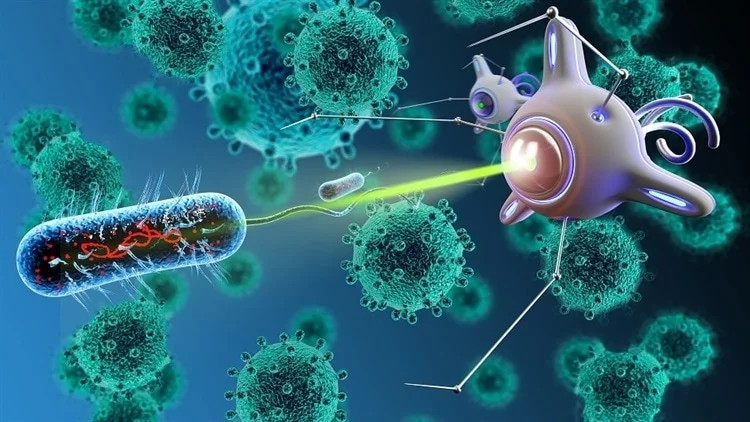
Additionally, nanomaterials are improving medical implants and prosthetics. Coating implants with nanostructures can increase biocompatibility, reduce infection risks, and enhance healing. Researchers are even exploring nanorobots—tiny machines that could one day navigate inside the human body to repair tissues, deliver drugs, or remove harmful substances.
Advancements in Electronics
The electronics industry has always pushed for smaller, faster, and more powerful devices. Nanotechnology is making this possible through nanoelectronics. Traditional silicon-based transistors are approaching their physical limits, but nanomaterials such as carbon nanotubes and graphene could replace them, enabling ultra-fast and energy-efficient processors.
Quantum dots, another product of nanotechnology, are already being used in high-resolution TV screens and monitors, producing brighter colors and sharper images. In the future, we may see the rise of flexible, transparent, and wearable electronics powered by nanoscale components. This could transform not only consumer electronics but also healthcare monitoring, smart clothing, and augmented reality devices.
Clean Energy Solutions
Nanotechnology also plays a vital role in addressing the world’s growing energy needs. Nanomaterials can significantly enhance the efficiency of solar panels, making renewable energy more affordable and accessible. For instance, nanostructured coatings can capture more sunlight and convert it into electricity with minimal loss.
In the field of batteries and energy storage, nanotech is enabling faster-charging, longer-lasting, and safer solutions. Lithium-ion batteries enhanced with nanomaterials charge in minutes rather than hours and have longer lifespans.
Nanotechnology is also being applied in fuel cells, hydrogen storage, and energy-efficient lighting, contributing to a cleaner and greener planet.
Environmental Protection
Beyond energy, nanotechnology offers innovative ways to tackle environmental challenges. Nanomaterials can be used to purify water by removing heavy metals, bacteria, and other contaminants. Nanofilters are lightweight, affordable, and effective, which could provide clean drinking water in areas with limited resources.
In air pollution control, nanocatalysts can break down harmful gases from vehicles and industries, reducing emissions. Nanotech also aids in oil spill cleanups through special nanosponges that absorb oil while repelling water.
These breakthroughs can make a huge difference in achieving global sustainability goals and protecting ecosystems.
Nanotechnology in Space Exploration
Space agencies are also exploring nanotechnology to improve spacecraft, satellites, and equipment. Lightweight nanomaterials reduce fuel consumption and cost while maintaining strength and durability. Nano-coatings can protect spacecraft from extreme space radiation and temperature changes.
Scientists are investigating nano-thrusters for efficient propulsion and nanostructured sensors for detecting extraterrestrial materials. In the long run, nanotechnology may even help in building habitats on other planets, using local resources at the nanoscale.
Challenges and Ethical Concerns
While nanotechnology holds incredible promise, it also comes with challenges and concerns. One major issue is safety. Nanoparticles, because of their small size, can interact unpredictably with biological systems. Some may be toxic or accumulate in organs if not properly tested. Ensuring environmental and human safety is crucial before large-scale applications.
There are also ethical and social concerns. Nanotechnology could create disparities between nations with access to advanced technologies and those without. Intellectual property rights, misuse in weapons, and privacy issues (through nanosensors) are important debates that need regulation and global cooperation.
The Future of Nanotechnology
Despite these challenges, the future of nanotechnology looks extremely promising. Research and development are accelerating, with governments, universities, and private companies investing billions into the field. By 2030, nanotechnology is expected to transform industries, create new markets, and change daily life in unimaginable ways.
We might see personalized medicine using nanorobots, smart homes with nanotech-based materials, cities powered by nano-enhanced renewable energy, and even space colonies supported by nanosystems. Just as the internet revolutionized the world in the past decades, nanotechnology could be the next big leap that defines the future of humanity.
Conclusion
Nanotechnology is not just a branch of science—it is a bridge to the future. By working at the smallest scale of matter, scientists are unlocking possibilities that could solve humanity’s biggest challenges in health, energy, environment, and beyond. While careful regulation and ethical consideration are necessary, the potential benefits far outweigh the risks.
The future with nanotechnology is a future of smarter solutions, longer lives, cleaner environments, and expanded horizons. As research continues to advance, it is not an exaggeration to say that nanotechnology may become the foundation of the next industrial and scientific revolution.
