
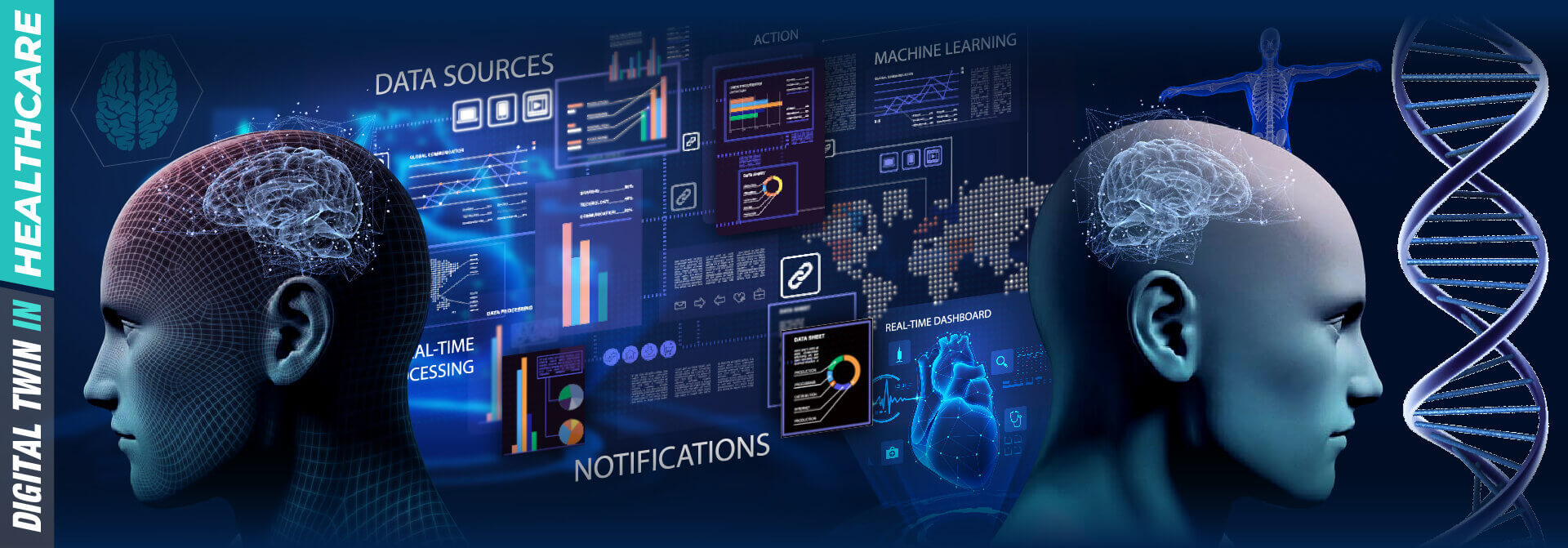
In the fast-paced digital age, organisations are constantly seeking innovative solutions to optimise operations, reduce costs, and increase efficiency. Among the most transformative technologies driving this change is the Digital Twin—a virtual representation of a physical object, process, or system that enables real-time monitoring, simulation, and optimisation. From manufacturing and healthcare to urban planning and energy, digital twins are redefining how industries operate and innovate.
This article explores the concept of digital twins, their benefits, applications, and the role they play in shaping a new era of technology focused on efficiency and intelligence.
What is a Digital Twin?
A digital twin is a dynamic, virtual model that mirrors a real-world object or process. By combining data, sensors, artificial intelligence (AI), and machine learning (ML), digital twins continuously receive input from the physical counterpart to simulate performance and predict outcomes. Unlike static models, digital twins evolve alongside their physical counterparts, providing a living, breathing representation of reality.
The idea originated in the early 2000s, but with advancements in Internet of Things (IoT), cloud computing, and analytics, digital twins have now become a cornerstone of Industry 4.0. They provide actionable insights that allow businesses to anticipate challenges and make smarter decisions in real-time.
Key Benefits of Digital Twins
Digital twins are not just about visualising data—they are about unlocking efficiency across every stage of the product or system lifecycle. Some of the most significant benefits include:
-
Operational Efficiency
-
Real-time monitoring reduces downtime by detecting anomalies before they escalate.
-
Continuous data streams allow organisations to fine-tune operations for optimal performance.
-
-
Predictive Maintenance
-
Instead of reacting to equipment failure, businesses can predict and prevent breakdowns.
-
This minimises unplanned downtime and reduces maintenance costs significantly.
-
-
Cost Savings
-
Simulations can test different scenarios without costly physical prototypes.
-
Optimised operations lower energy consumption and resource waste.
-
-
Faster Innovation
-
Engineers can experiment in the virtual world, accelerating product development cycles.
-
Potential design flaws are identified early, leading to safer and more reliable products.
-
-
Sustainability
-
By optimising energy and resource usage, digital twins contribute to greener operations.
-
Smart simulations help businesses achieve sustainability goals while maintaining profitability.
-
Applications of Digital Twins Across Industries
Digital twins have universal appeal, with use cases spreading rapidly across multiple industries. Let’s look at some key examples:
1. Manufacturing
Manufacturing is the birthplace of digital twins. Factories use them to design production lines, monitor machinery, and streamline supply chains. A digital twin of an assembly line, for example, can simulate production output, identify bottlenecks, and test process improvements without disrupting ongoing operations.
2. Healthcare
In healthcare, digital twins are being used to create patient-specific models. By mirroring a patient’s heart, lungs, or other organs, doctors can predict how treatments or surgeries will impact outcomes. Pharmaceutical companies also use digital twins to simulate drug behaviour, reducing the time and cost of clinical trials.
3. Energy and Utilities
Energy companies deploy digital twins to manage power plants, wind farms, and grids. They help predict energy demand, optimise resource distribution, and ensure stability in supply. For renewable energy, digital twins can forecast wind or solar output and adjust operations accordingly.
4. Smart Cities
Urban planners are turning to digital twins to design smarter, more resilient cities. Entire cities can be digitally replicated, allowing planners to simulate traffic flow, energy use, and disaster response. This leads to better infrastructure decisions and improved quality of life for citizens.
5. Aerospace and Automotive
Aeroplane engines and vehicles are equipped with sensors that feed data into digital twins. These models track wear and tear, predict part failures, and optimise fuel efficiency. For the automotive industry, digital twins support connected cars and autonomous vehicle testing in virtual environments.
The Technology Behind Digital Twins
Digital twins are made possible by the convergence of several cutting-edge technologies:
-
IoT Sensors: Provide real-time data from physical assets.
-
Artificial Intelligence & Machine Learning: Analyse patterns, make predictions, and enable automation.
-
Cloud Computing: Offers scalable storage and processing power to handle vast data streams.
-
Augmented and Virtual Reality (AR/VR): Enhance visualisation and interaction with digital twins.
-
5G Connectivity: Ensures seamless, high-speed data transfer between physical and digital systems.
Together, these technologies create an ecosystem where digital twins thrive—making real-time insights not only possible but actionable.
Challenges in Implementing Digital Twins
Despite the vast potential, adopting digital twins comes with challenges:
-
Data Management
-
Handling massive streams of real-time data requires robust infrastructure and governance.
-
-
Integration Complexity
-
Connecting multiple systems, sensors, and platforms can be complex and costly.
-
-
Cybersecurity Risks
-
As digital twins rely heavily on connected devices, they become potential targets for cyberattacks.
-
-
High Initial Costs
-
The investment in sensors, software, and cloud services may deter smaller businesses.
-
-
Skill Gaps
-
Implementing and maintaining digital twins requires expertise in data science, IoT, and AI—skills that are still scarce in many industries.
-
The Future of Digital Twins
The future of digital twins lies in greater integration with AI-driven automation, edge computing, and metaverse applications. In the coming years, digital twins will become more autonomous, capable of self-optimising without human intervention.
-
In industry, factories of the future will be fully virtualised before construction, ensuring maximum efficiency.
-
In healthcare, personalised digital twins will revolutionise preventive care, allowing treatments tailored to individual biology.
-
In cities, digital twins will enable “living urban environments” that adapt dynamically to population needs and environmental pressures.
According to market research, the global digital twin market is projected to grow exponentially, reaching hundreds of billions of dollars within the next decade. This underscores the critical role digital twins will play in the next wave of technological transformation.
Conclusion
Digital twins represent more than a technological trend—they are a paradigm shift toward efficiency, innovation, and resilience. By bridging the gap between the physical and digital worlds, they empower industries to monitor, simulate, and optimise like never before.
As organisations embrace this transformative technology, the result will be smarter factories, healthier patients, greener energy, and more livable cities. In essence, digital twins unlock a new era of technology where efficiency is not just a goal but a built-in outcome.
The question is no longer if businesses should adopt digital twins, but when. Those who embrace this shift early will lead the charge in shaping a more intelligent and efficient future.
