
Introduction
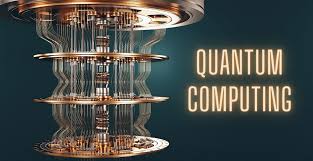
Technology has always been the driving force behind human progress. From the invention of the wheel to the digital revolution, each leap has transformed the way we live, work, and think. Today, the world stands on the brink of yet another revolutionary breakthrough: quantum computing. While traditional computers have powered modern civilization, they are now approaching their limits in solving highly complex problems. Quantum computing, on the other hand, promises a future where tasks that would take classical computers thousands of years can be completed in just a few seconds. This transformative technology is not just about faster computation—it is about unlocking a new frontier of possibilities across industries, science, and society.
What is Quantum Computing?
Quantum computing is a branch of computing that uses the principles of quantum mechanics, the science that explains the behavior of particles at atomic and subatomic levels. Unlike classical computers, which process data in bits (0s and 1s), quantum computers use qubits. A qubit can exist not only as a 0 or 1 but also as both simultaneously, thanks to a property called superposition. Additionally, qubits can be linked together through entanglement, allowing them to work in harmony and perform calculations at unprecedented speed and scale.
In simple terms, while a classical computer would try to solve a problem step by step, a quantum computer explores many possibilities at once, making it exponentially more powerful for certain tasks.
The Difference Between Classical and Quantum Computers
-
Classical Computers: Operate using binary bits (0 or 1). Good for day-to-day tasks such as browsing, calculations, word processing, and running software.
-
Quantum Computers: Use qubits, superposition, and entanglement. Best suited for solving highly complex problems like drug discovery, climate modeling, cryptography, and optimization.
For example, if a classical computer were asked to solve a complex puzzle, it would check each possible solution one at a time. A quantum computer, however, could analyze all possible solutions simultaneously and find the correct one much faster.
Applications of Quantum Computing
The true power of quantum computing lies in its applications across industries and sciences. Here are some of the most promising areas:
1. Healthcare and Drug Discovery
Quantum computing can simulate molecules and chemical reactions at the quantum level, something traditional computers struggle with. This capability could speed up the discovery of new medicines, vaccines, and treatments for complex diseases such as cancer or Alzheimer’s.
2. Cryptography and Cybersecurity
Today’s encryption methods rely on the difficulty of solving certain mathematical problems, which classical computers cannot easily break. However, quantum computers could crack these codes in minutes. On the positive side, they also enable quantum cryptography, a new way to secure communications that is virtually unbreakable.
3. Artificial Intelligence and Machine Learning
AI systems require massive amounts of data processing. Quantum computing can accelerate machine learning algorithms, making AI smarter, faster, and more capable of solving real-world problems, from natural language processing to autonomous driving.
4. Climate Modeling and Sustainability
Quantum computers can simulate complex environmental systems to predict climate changes more accurately. They can also help optimize renewable energy grids, design sustainable materials, and tackle pressing environmental challenges.
5. Finance and Business Optimization
Banks and financial institutions can use quantum algorithms for portfolio optimization, fraud detection, and risk management. Quantum computing could also improve supply chain management and logistics for global businesses.
6. Space Exploration and Physics Research
From simulating black holes to decoding the mysteries of the universe, quantum computing will empower scientists to answer questions that were once thought impossible.
Challenges of Quantum Computing
While quantum computing is highly promising, it also comes with significant challenges:
-
Fragility of Qubits: Qubits are extremely sensitive to their environment, and even minor disturbances can cause errors.
-
Error Correction: Building error-free quantum systems is one of the greatest scientific challenges today.
-
Scalability: Most existing quantum computers only have a few dozen qubits, while practical applications may require thousands or even millions.
-
High Costs: Quantum computers require highly controlled environments, often operating near absolute zero temperature, making them very expensive.
-
Security Risks: As quantum computing advances, current cryptographic methods may become obsolete, requiring urgent innovation in cybersecurity.
Global Leaders in Quantum Computing
Several companies, research institutes, and governments are racing to develop practical quantum computers.
-
Google: Achieved “quantum supremacy” in 2019 by performing a calculation faster than the most powerful supercomputer.
-
IBM: Offers cloud-based access to quantum systems through IBM Quantum Experience.
-
Microsoft, Intel, and Amazon: Investing heavily in quantum research.
-
China and Europe: Running large-scale government-backed programs to dominate quantum technology.
This global race is not just about technology but also about strategic advantage in science, economy, and national security.
The Future of Quantum Computing
Quantum computing is still in its early stages, often compared to classical computers in the 1940s. However, the progress is rapid. Experts predict that within the next 10–20 years, quantum computers will reach a level of maturity where they can solve real-world problems that classical computers cannot.
In the future, we may see:
-
Breakthroughs in personalized medicine.
-
Stronger cybersecurity through quantum-safe encryption.
-
Smarter AI systems.
-
Advances in sustainable technologies.
-
Global industries reshaped by quantum-powered problem-solving.
Conclusion
Quantum computing represents one of the most exciting frontiers of modern science and technology. By harnessing the strange but powerful principles of quantum mechanics, it promises to solve problems that were once considered unsolvable. From revolutionizing medicine to securing digital communication and accelerating scientific discovery, quantum computing holds the key to unlocking the next era of innovation.
While challenges remain, the progress being made suggests that the future of technology will be quantum-powered. Just as classical computers transformed the world in the 20th century, quantum computing is set to redefine the 21st century and beyond.
