
Introduction
The 21st century is witnessing an unprecedented acceleration in technological innovation, and at the heart of this transformation lies quantum computing. Unlike traditional computing, which relies on binary bits, quantum computing harnesses the principles of quantum mechanics—superposition, entanglement, and tunnelling—to process information in once unimaginable ways. Yet, as quantum systems advance, one of the biggest questions arises: how do we manage, store, and structure the data within this new paradigm?
The answer comes in the form of QuantumLattice, a revolutionary framework designed to redefine data structures in the age of quantum power. More than just a conceptual leap, QuantumLattice represents a shift in how humanity organises information for a future defined by quantum technologies.
The Challenge of Data in the Quantum Era
Traditional computing relies on well-established data structures: arrays, linked lists, trees, and graphs. These structures are optimised for classical machines that process information sequentially or in parallel across binary states. However, quantum computers don’t conform to these limitations.
Instead, they operate in a probabilistic domain where data isn’t just 0 or 1 but can exist in superpositions of states. This fundamentally alters:
-
How information is represented
-
How algorithms interact with data
-
How outcomes are interpreted
For example, a classical binary tree may organise information hierarchically, but in a quantum environment, the same structure could potentially exist in multiple states simultaneously. Without new approaches, classical data structures fail to unlock the true potential of quantum computation.
This is why QuantumLattice is critical — it offers a multi-dimensional, adaptive framework to structure data for quantum algorithms, ensuring both efficiency and scalability in a world powered by qubits.
What is QuantumLattice?
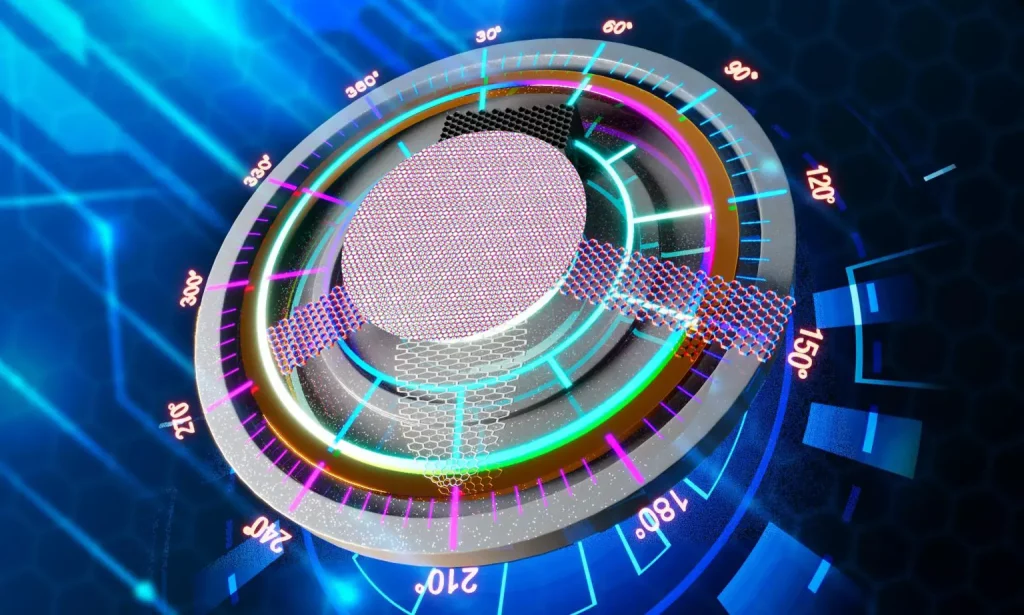
QuantumLattice can be envisioned as a dynamic, lattice-like framework where data nodes exist in superposition and entangled states, enabling multidimensional interactions. Unlike rigid classical structures, the QuantumLattice is:
-
Adaptive – It evolves with computation, restructuring itself in real time based on quantum states.
-
Probabilistic – Instead of fixed positions, data points exist in distributions across the lattice.
-
Multi-Layered – Each layer of the lattice can represent a different dimension of computation (e.g., probability, phase, entanglement).
-
Scalable – Designed to handle exponential growth in qubits without collapsing under complexity.
In simple terms, QuantumLattice is the “data skeleton” of the quantum world, organising information in a way that maximises quantum computational power.
The Core Principles Behind QuantumLattice
-
Superpositional Data Representation
-
Traditional structures store one value at a time. QuantumLattice allows nodes to represent multiple values simultaneously, reflecting quantum superposition.
-
-
Entangled Data Links
-
Instead of simple pointers or connections, QuantumLattice builds entangled links where a change in one node directly impacts its entangled partner, even across distances.
-
-
Probabilistic Indexing
-
Classical indexing (like array positions) becomes irrelevant in quantum systems. Instead, QuantumLattice uses probabilistic indices where access paths are determined by likelihood distributions.
-
-
Dynamic Reconfiguration
-
As quantum algorithms run, the structure reshapes itself in real time, unlike classical structures that remain static unless explicitly modified.
-
Applications of QuantumLattice
1. Quantum Machine Learning (QML)
QuantumLattice could serve as the foundation for structuring training data in QML. It allows simultaneous exploration of multiple states, drastically accelerating learning models like quantum neural networks.
2. Cryptography and Security
Future-proof encryption relies on quantum principles. QuantumLattice can help organise cryptographic keys and communication protocols in entangled structures, making interception nearly impossible.
3. Drug Discovery and Molecular Simulation
In pharmaceuticals, quantum computing models molecular interactions at a scale beyond classical limits. QuantumLattice structures the massive datasets of chemical properties and entanglements required for accurate simulations.
4. Financial Modelling
Markets are inherently probabilistic. QuantumLattice can model multiple financial outcomes simultaneously, supporting risk analysis, portfolio optimisation, and predictive economics.
5. Smart Cities and IoT
IoT devices will generate exabytes of data daily. QuantumLattice provides a framework to process and restructure this data in real time, enhancing efficiency in traffic control, energy distribution, and public safety.
QuantumLattice vs. Classical Data Structures
| Aspect | Classical Structures | QuantumLattice |
|---|---|---|
| Data Representation | Deterministic (0 or 1) | Superpositional (0 and 1 simultaneously) |
| Links | Static pointers | Entangled, dynamic connections |
| Scalability | Linear/Logarithmic | Exponential |
| Adaptability | Requires manual changes | Self-adaptive during computation |
| Suitability | Classical algorithms | Quantum algorithms & AI |
This comparison highlights why QuantumLattice is indispensable as we move deeper into the quantum era.
The Role of AI in QuantumLattice
Artificial Intelligence will play a pivotal role in making QuantumLattice practical:
-
AI-Driven Optimisation: Machine learning can help restructure the lattice for optimal quantum performance.
-
Error Correction: Quantum systems are prone to noise and decoherence. AI can monitor and adjust lattice structures for error resilience.
-
Hybrid Systems: AI will bridge the gap between classical preprocessing and quantum computation, ensuring seamless data flow into the QuantumLattice.
In short, AI and QuantumLattice form a symbiotic relationship — AI strengthens quantum data handling, and QuantumLattice expands AI’s computational horizons.
Challenges in Building QuantumLattice
Despite its promise, there are hurdles to overcome:
-
Quantum Hardware Limitations
-
Current quantum computers are still in the NISQ era (Noisy Intermediate-Scale Quantum). Scaling lattices effectively requires more stable qubits.
-
-
Error Rates and Decoherence
-
Quantum states are fragile. Maintaining a functional lattice demands advanced error correction.
-
-
Standardization
-
Like classical programming languages, quantum systems need universal standards for lattice structures to ensure cross-platform compatibility.
-
-
Talent Gap
-
Expertise in quantum algorithms, physics, and data engineering is still scarce, slowing down widespread adoption.
-
The Future of QuantumLattice
The trajectory of QuantumLattice is tied directly to the evolution of quantum computing itself. Over the next decade, we can expect:
-
Integration with Cloud Quantum Services: Tech giants like IBM, Google, and Microsoft will likely embed QuantumLattice frameworks into their quantum cloud offerings.
-
Rise of Quantum-Native Databases: Databases specifically built on QuantumLattice principles will emerge, enabling enterprises to manage quantum-era information efficiently.
-
Hybrid Classical-Quantum Systems: Initially, QuantumLattice may coexist with classical data structures, creating powerful hybrid computational ecosystems.
-
Wider Industry Adoption: From healthcare to finance, industries that depend on heavy data processing will adopt QuantumLattice for a competitive advantage.
Conclusion
“QuantumLattice: Redefining Data Structures in the Age of Quantum Power” is not just a technological concept — it is a vision for the future of computation. As quantum power becomes mainstream, the way we store, manage, and manipulate information must evolve beyond classical limitations.
QuantumLattice provides the blueprint: a probabilistic, adaptive, entangled framework that aligns perfectly with the principles of quantum mechanics. It enables breakthroughs in AI, healthcare, finance, cryptography, and beyond.
Just as binary trees, linked lists, and graphs defined the classical computing era, QuantumLattice will define the quantum era. Those who embrace it early will not only keep pace with technological change but will lead in building a smarter, faster, and more resilient digital future.
