
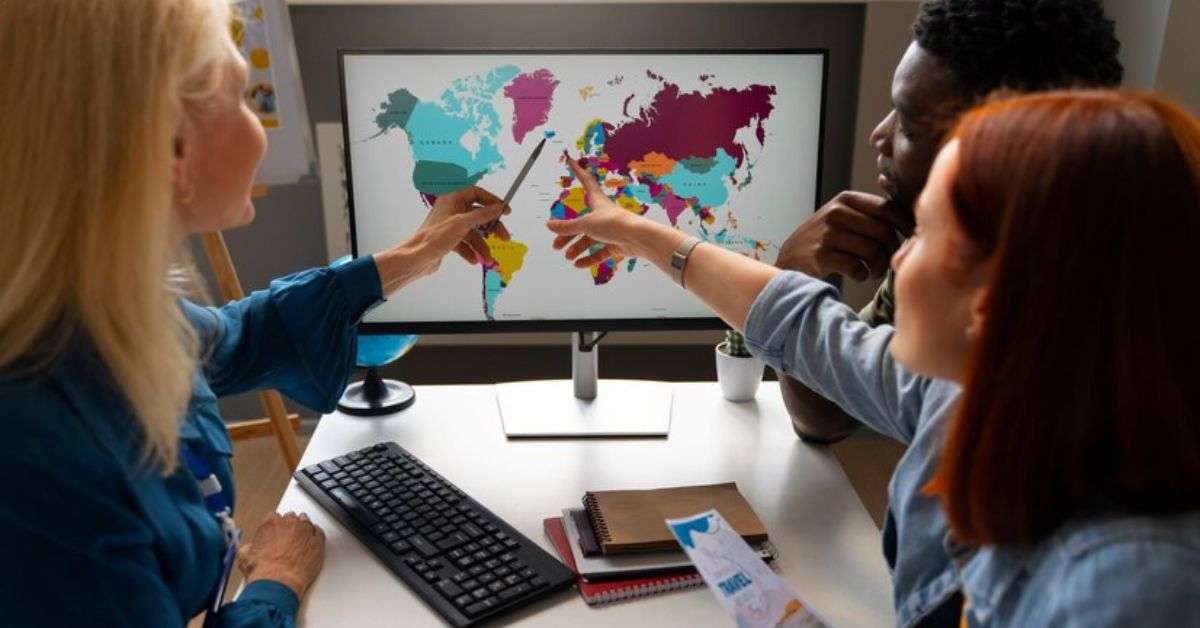
In today’s globalized and interconnected world, the ability to communicate across languages has become more important than ever. Businesses, governments, educational institutions, and individuals all require seamless communication to exchange ideas, share knowledge, and foster collaboration. This growing demand has pushed technology to evolve rapidly, and translation tools have become essential for breaking down linguistic barriers. Among the innovations emerging in this landscape, Käänjä stands out as a transformative force. Positioned as more than just a translation platform, Käänjä represents a new era of digital communication—redefining how we understand, connect, and collaborate across cultures.
The Need for Advanced Translation in the Digital Age
Language barriers have long been a challenge in human interaction. Traditional translation methods, such as manual interpretation or professional human translators, though accurate, are often expensive and time-consuming. As businesses expand globally and digital communication accelerates, these methods alone cannot keep up with the pace and scale of demand.
The digital era requires solutions that are fast, reliable, and accessible to anyone, anywhere in the world. Online businesses want to serve customers in multiple languages, researchers want to collaborate globally, and content creators want to reach diverse audiences. All of this makes advanced translation technology not just helpful but essential.
Käänjä enters this space by offering a revolutionary approach that combines speed, accuracy, and cultural sensitivity—factors that are often missing in conventional translation tools.
What Makes Käänjä Revolutionary?
Käänjä is not simply another online translator. It is designed as a next-generation translation ecosystem that leverages artificial intelligence, natural language processing (NLP), and contextual learning to ensure translations are not only linguistically accurate but also culturally relevant.
Here are some of the features that make Käänjä stand out:
-
Contextual Understanding
Unlike many traditional translators that provide literal, word-for-word translations, Käänjä focuses on context. It can understand idioms, cultural references, and tone, making translations more natural and relatable. -
Multi-Industry Applications
Käänjä is designed to be flexible enough to serve multiple industries—education, healthcare, e-commerce, tourism, and even government communication. Whether it’s translating medical documents with precision or adapting marketing campaigns for local audiences, Käänjä delivers. -
Real-Time Translation
In an era of instant communication, real-time translation is vital. Käänjä offers live speech-to-text and text-to-text translations, allowing seamless conversations across languages without delays. -
AI-Powered Learning
Käänjä continuously learns and improves with every interaction. Its AI adapts to user behavior, industry-specific terms, and evolving linguistic trends. This ensures that the more it is used, the more accurate and efficient it becomes. -
Cultural Nuance Detection
One of the biggest challenges in translation is maintaining the cultural meaning behind words. Käänjä goes beyond direct translation by incorporating cultural sensitivity, ensuring messages retain their intended impact in different languages.
Käänjä in Business and Commerce
For businesses, language barriers can limit growth. A company trying to expand into international markets must adapt its brand message for each region. Poor translations can lead to misunderstandings, lost customers, or even reputational damage.
Käänjä addresses this by offering localization services—a step beyond simple translation. Localization adapts content to suit cultural preferences, humor, and values. For example, a slogan that works in English may not resonate in Japanese or Arabic. Käänjä ensures that marketing campaigns, product descriptions, and customer support services align with the cultural expectations of each market.
This makes Käänjä a valuable partner for e-commerce companies, multinational corporations, and startups alike, helping them reach global audiences effectively and authentically.
Käänjä in Education and Research
Education thrives on collaboration and access to knowledge. With resources, research papers, and lectures available in multiple languages, students and researchers often face linguistic challenges.
Käänjä offers academic translation tools that not only convert words but also maintain the integrity of complex scientific or technical terminology. This allows researchers from different countries to collaborate without the barrier of language. Similarly, students can access materials in their native language, making learning more inclusive.
Käänjä in Healthcare
One of the most critical applications of Käänjä lies in healthcare. Miscommunication between doctors and patients due to language differences can have serious consequences.
Käänjä’s medical translation tools are trained to recognize medical terminology and provide accurate translations in real time. This ensures doctors can communicate effectively with patients from different linguistic backgrounds, reducing risks and improving healthcare accessibility worldwide.
Käänjä for Individuals and Travelers
Global tourism is another sector where language barriers are a daily challenge. Travelers often struggle with signs, menus, or conversations in foreign languages. Käänjä provides real-time mobile translations that make travel easier, safer, and more enjoyable.
Imagine walking through a market in Tokyo or Istanbul and being able to understand every sign, bargain with local vendors, or order food confidently—all thanks to Käänjä’s instant, context-aware translation.
Challenges and Future Potential
While Käänjä is revolutionary, challenges remain. No translation technology is perfect—languages are deeply tied to culture, history, and emotion, making complete accuracy a complex goal. Slang, dialects, and evolving linguistic trends add another layer of difficulty.
However, Käänjä is positioned to grow with these challenges. With ongoing AI training, user feedback, and global adoption, it can evolve into one of the most trusted translation solutions worldwide. Future possibilities include integration with augmented reality (AR) glasses for real-time visual translation, voice assistants with multilingual fluency, and deep integration in global business platforms.
Conclusion
Käänjä is more than just a translation tool—it is a bridge that connects cultures, businesses, and individuals across the world. By combining AI-driven accuracy with cultural understanding, it stands at the forefront of the digital translation revolution.
In a world where communication defines progress, Käänjä empowers people to collaborate without borders, to learn without restrictions, and to connect without limits. It is not simply changing how we translate words—it is redefining how we understand one another in the digital age.
