
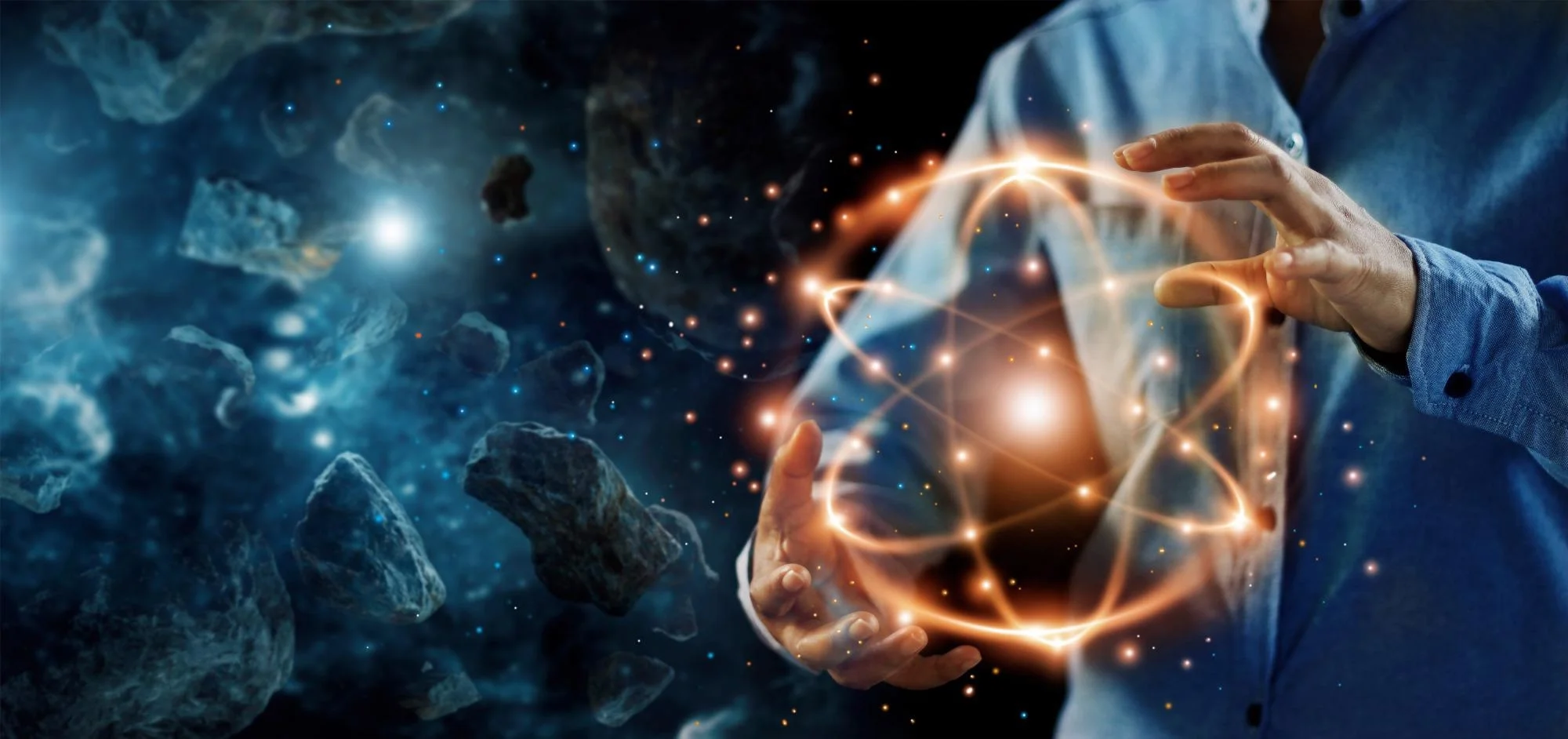
In the last few decades, the world has witnessed exponential growth in both computing and communication technologies. From the advent of the internet to the evolution of cloud computing and artificial intelligence, the trajectory of progress has been astounding. Yet, as demands on data processing, connectivity, and security grow, classical approaches are reaching their limits. This is where QuantumFluxNet emerges—a transformative concept that combines the mysterious yet powerful principles of quantum mechanics with the intelligent architecture of modern networking. It is more than a buzzword; it is a blueprint for the future of communication, computation, and data flow.
The Foundations: Why Quantum Matters
Quantum mechanics, at its core, deals with phenomena that occur at the smallest scales of nature—subatomic particles like electrons and photons. Unlike classical physics, where systems exist in definite states, quantum systems operate with principles such as superposition, entanglement, and tunnelling. These features give quantum technology unprecedented advantages:
- Superposition allows quantum systems to process multiple states at once, greatly enhancing computational capacity.
- Entanglement ensures that particles separated by vast distances can share states instantaneously, paving the way for ultra-secure and faster communication.
- Quantum uncertainty provides new ways to generate unbreakable encryption keys.
By embedding these principles into networking systems, QuantumFluxNet could redefine how data flows across the globe.
What is QuantumFluxNet?
QuantumFluxNet can be envisioned as a networking paradigm powered by quantum-enhanced mechanisms. Unlike classical networks that transmit binary bits, QuantumFluxNet is designed to handle quantum bits (qubits)—the fundamental unit of quantum information. These qubits can encode more complex data than simple 1s and 0s, allowing for exponentially greater throughput and processing efficiency.
But QuantumFluxNet is not just about replacing bits with qubits. It integrates AI-driven optimisation, distributed architectures, and next-generation hardware with quantum channels. The result is a system that combines raw quantum capability with the intelligent adaptability of modern smart networks.
Key Components of QuantumFluxNet
To understand the depth of its potential, let’s break down the critical components:
- Quantum Communication Channels
Fibre-optic cables and satellite links equipped with quantum repeaters can transmit entangled photons, ensuring secure communication that cannot be eavesdropped on without detection. - Smart Networking Protocols
Using AI, QuantumFluxNet optimises routing, traffic management, and resource allocation in real time. This ensures minimal latency, high throughput, and adaptive resilience to network failures. - Quantum-Secure Encryption
Classical cryptography is increasingly threatened by the rise of quantum computers. QuantumFluxNet integrates quantum key distribution (QKD) to secure transmissions against even the most advanced computational attacks. - Hybrid Infrastructure
Since global systems cannot shift instantly from classical to quantum, QuantumFluxNet envisions a hybrid model. This means classical nodes and quantum-enabled nodes will coexist, ensuring a smooth transition. - Flux-Based Resource Management
Inspired by energy flows in physics, QuantumFluxNet balances data traffic dynamically, ensuring optimal performance across distributed systems.
Why QuantumFluxNet Matters
The importance of QuantumFluxNet lies in the convergence of three crucial needs in today’s digital age:
- Security: With cyber threats escalating, especially from potential quantum hacking, traditional encryption methods are nearing obsolescence. QuantumFluxNet’s security-by-design model ensures invulnerability to brute-force attacks.
- Scalability: As data consumption explodes—through IoT devices, AI models, and immersive technologies—classical networks will struggle. Quantum-based throughput can handle this growth.
- Efficiency: Energy efficiency is one of the most pressing concerns of large-scale networks. Quantum processes, combined with smart optimisation, can reduce the environmental footprint of data systems.
Applications Across Industries
The real promise of QuantumFluxNet lies in its ability to transform industries:
- Healthcare
With quantum-enhanced data sharing, hospitals could securely transmit sensitive patient records across borders while maintaining strict privacy. Quantum networks could also accelerate drug discovery by linking quantum computers in real time. - Finance
Banks and financial institutions could employ QuantumFluxNet to secure global transactions, protect customer data, and manage stock market predictions with unprecedented accuracy. - Defence and National Security
Governments could use QuantumFluxNet for unbreakable communications, ensuring strategic data remains beyond the reach of cyber adversaries. - Smart Cities
From traffic systems to energy grids, QuantumFluxNet could provide the backbone for hyper-connected urban infrastructure, making real-time decision-making more efficient. - Scientific Research
By linking quantum computers globally, QuantumFluxNet could create a distributed quantum internet—accelerating breakthroughs in physics, climate modelling, and genomics.
Challenges to Overcome
As groundbreaking as it sounds, QuantumFluxNet faces significant challenges:
- Technological Limitations: Current quantum hardware is fragile and prone to decoherence, limiting its large-scale use.
- Infrastructure Costs: Building quantum communication channels, satellites, and repeaters will require enormous investments.
- Standardisation: Just as the internet needed universal protocols, QuantumFluxNet will require standardised frameworks for interoperability.
- Ethical and Security Concerns: While quantum networking enhances security, it also raises questions about access control, governance, and potential misuse.
The Road Ahead
Despite these hurdles, progress is steady. Governments and private companies are heavily investing in quantum internet prototypes. The European Union’s Quantum Flagship program, China’s Micius satellite for quantum communication, and the U.S. Department of Energy’s quantum networking projects are early steps toward the realisation of concepts like QuantumFluxNet.
Moreover, advancements in machine learning integration, photonic chips, and quantum repeaters are rapidly accelerating the pace of development. Within the next two decades, QuantumFluxNet could evolve from a theoretical framework into a global infrastructure supporting billions of devices.
Conclusion
QuantumFluxNet represents a paradigm shift in how humanity will connect, compute, and communicate. By merging the counterintuitive yet immensely powerful rules of quantum mechanics with the intelligent adaptability of smart networks, it paves the way for a future where data is faster, safer, and smarter. Though challenges remain, the promise of QuantumFluxNet is clear: a world where the very fabric of connectivity is rewritten at the quantum level.
Just as the internet revolutionised the 20th century, QuantumFluxNet has the potential to define the 21st. It is not merely an evolution of networking—it is the fusion of physics, intelligence, and imagination into one seamless system that could reshape the future of human civilisation.
