
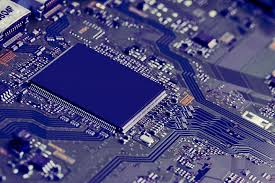
In today’s digital age, innovation often comes in small packages. Microtechnology, the science and engineering of devices and systems at the microscopic scale, has become one of the most powerful forces shaping modern industries. While it may deal with objects too small to see with the naked eye, its impact is vast—transforming healthcare, electronics, communication, manufacturing, and even the environment.
This article explores the meaning of microtechnology, its applications, and how small-scale solutions are driving big changes across the globe.
Understanding Microtechnology
Microtechnology refers to the study and application of structures, devices, and systems at the micrometer scale (one millionth of a meter). It is closely related to nanotechnology but focuses on slightly larger dimensions, often ranging from 1 to 100 micrometers.
The foundation of microtechnology lies in miniaturization—making devices smaller, faster, and more efficient without sacrificing performance. Advances in material science, semiconductor engineering, and precision manufacturing have enabled researchers to design micro-scale systems that can outperform their larger counterparts.
A Brief History of Microtechnology
The roots of microtechnology can be traced back to the invention of the transistor in 1947, which laid the groundwork for miniaturized electronics. By the 1960s, the first integrated circuits were developed, enabling the creation of microchips and eventually microprocessors.
As computing power followed Moore’s Law, microtechnology advanced rapidly. The ability to pack millions, and now billions, of transistors onto tiny chips revolutionized computing, telecommunications, and consumer electronics. Today, microtechnology is at the heart of nearly every digital device we use.
Applications of Microtechnology
1. Electronics and Computing
Microtechnology is the backbone of modern electronics. Microprocessors, microcontrollers, and memory chips are essential for smartphones, laptops, gaming consoles, and countless other devices. The trend toward smaller, faster, and more powerful chips continues to fuel advancements in artificial intelligence, cloud computing, and edge devices.
2. Medical and Healthcare Innovations
Microtechnology has transformed healthcare by enabling precise diagnostic tools and advanced treatments. Examples include:
-
Lab-on-a-chip systems that can perform complex medical tests using just a drop of blood.
-
Microsensors that monitor vital signs in real time.
-
Microscale surgical tools that allow for minimally invasive procedures.
-
Implantable devices, such as pacemakers and insulin pumps, powered by microelectronics.
These innovations make healthcare more accessible, accurate, and personalized.
3. Communication Systems
Modern communication relies heavily on microtechnology. Microchips in smartphones, satellites, and networking equipment enable high-speed data transfer, video streaming, and global connectivity. The rollout of 5G and future 6G networks depends on micro-scale components capable of handling massive data flows with minimal latency.
4. Energy and Environment
Microtechnology contributes to energy efficiency and environmental protection. For instance:
-
Micro-solar cells increase renewable energy adoption.
-
Micro-batteries provide high power density for portable devices.
-
Microscale sensors monitor air and water quality, helping detect pollution in real time.
By integrating small-scale solutions into larger systems, microtechnology supports sustainable innovation.
5. Automotive and Aerospace
Microtechnology enables the sensors, microcontrollers, and chips that power advanced vehicles. Self-driving cars rely on LiDAR and microsensors for navigation. In aerospace, micro-scale electronics reduce weight while improving performance, making flights safer and more fuel-efficient.
6. Consumer Products
From household appliances to wearable technology, microtechnology is embedded in everyday life. Fitness trackers, smartwatches, and wireless earbuds all rely on micro-scale electronics to deliver compact, powerful solutions.
Micro-Electro-Mechanical Systems (MEMS)
One of the most exciting developments in microtechnology is MEMS (Micro-Electro-Mechanical Systems). These are tiny devices that combine mechanical and electrical components on a microchip. MEMS are used in:
-
Accelerometers in smartphones and cars.
-
Pressure sensors in medical devices.
-
Micro-mirrors in projectors.
-
Inkjet printer heads.
MEMS devices are lightweight, low-cost, and highly reliable, making them critical for innovation in multiple industries.
The Advantages of Microtechnology
-
Miniaturization – Devices can be made smaller and more portable.
-
Energy Efficiency – Smaller systems consume less power.
-
Precision – Micro-scale tools offer incredible accuracy in fields like medicine and engineering.
-
Cost-Effectiveness – Mass production of microchips reduces costs.
-
Versatility – Applicable across healthcare, electronics, energy, and more.
Challenges in Microtechnology
Despite its success, microtechnology faces several challenges:
-
Manufacturing complexity: Creating reliable micro-scale systems requires precision engineering.
-
Heat management: Smaller devices generate significant heat that must be controlled.
-
Costs of research: Advanced microtechnology development can be expensive.
-
Ethical concerns: In healthcare, questions arise about data privacy and the limits of implantable devices.
Overcoming these challenges will be key to sustaining growth in the field.
The Future of Microtechnology
The future of microtechnology lies in integration with other cutting-edge fields, particularly nanotechnology, artificial intelligence, and biotechnology. Key trends include:
-
Smarter medical implants that can diagnose and treat conditions automatically.
-
Ultra-efficient microchips designed for AI and quantum-inspired computing.
-
Flexible and wearable microelectronics integrated into clothing and accessories.
-
Micro-robots capable of performing tasks inside the human body, such as clearing clogged arteries or delivering targeted drugs.
-
Sustainable micro-devices for renewable energy and environmental monitoring.
As industries demand smaller, faster, and greener solutions, microtechnology will remain a driving force in shaping the digital future.
Conclusion
Microtechnology demonstrates that size is not a limitation but a source of strength. By focusing on innovation at the microscopic level, scientists and engineers have created solutions that touch nearly every part of modern life—from healthcare and communications to energy and entertainment.
Though often invisible, microtechnology powers the visible world. Its ability to deliver compact, efficient, and precise systems makes it one of the most important technological fields of our time. As the boundaries between micro, nano, and even quantum technologies continue to blur, the innovations born at the microscopic scale will shape the future of human progress.
