
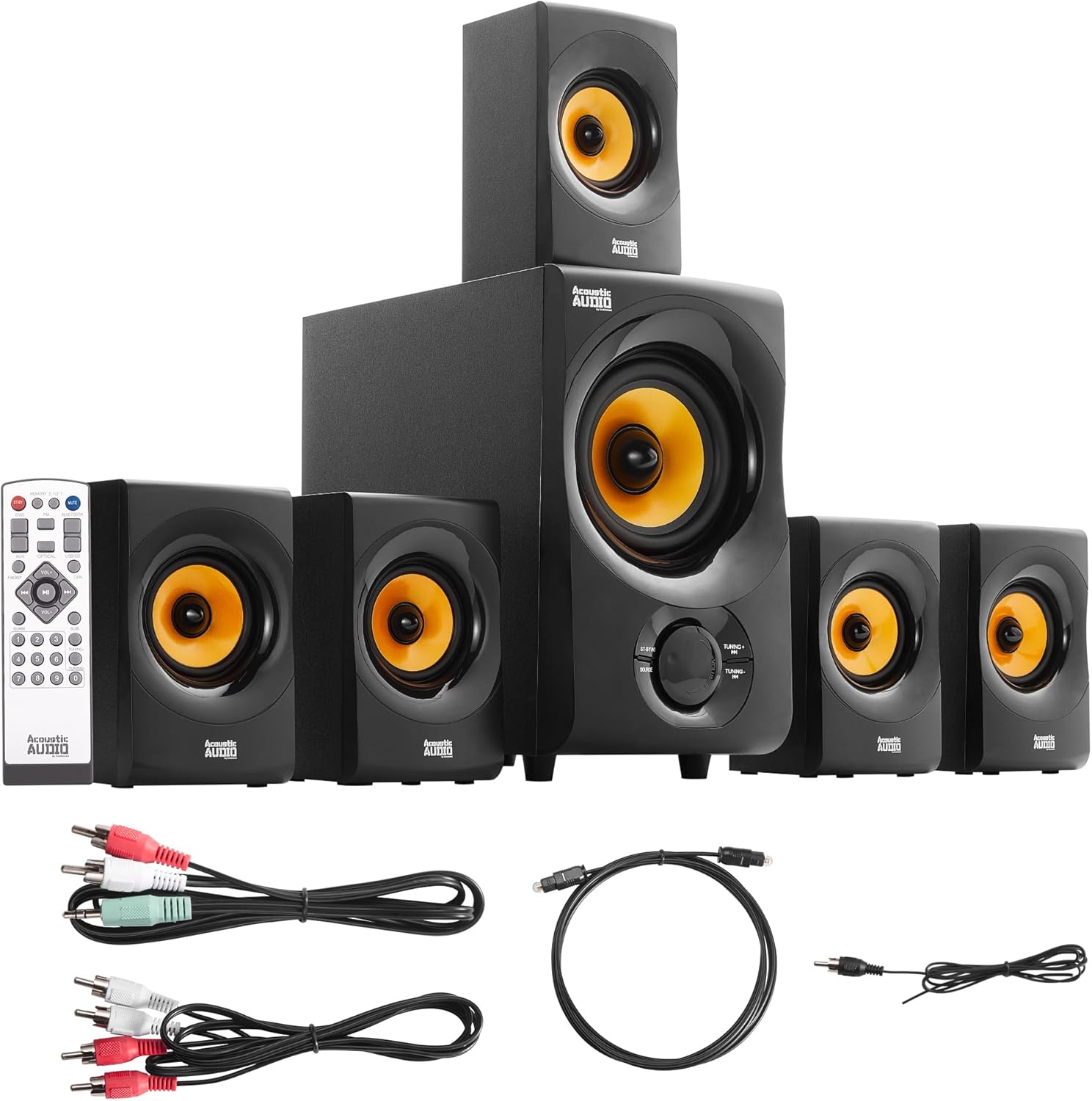
Speaker technology is one of those everyday miracles that most of us take for granted. You push play, and suddenly music, voices, or the roar of a movie soundtrack fills the room. But behind that effortless sound lies a fascinating mix of physics, engineering, and digital wizardry.
Let’s dive deep into how speaker technology works, its evolution, and the latest innovations reshaping the way we experience sound.
1. The Basics: How Speakers Turn Electricity Into Sound
At its core, a speaker converts electrical signals into mechanical vibrations, which then move the air — creating sound waves that your ears can hear.
The Science in Simple Terms:
-
Electrical Signal – The sound file (music, voice, etc.) is turned into an electrical signal.
-
Voice Coil – A coil of wire inside the speaker that reacts to the electric current.
-
Magnet – Fixed in place, it interacts with the coil’s changing magnetic field.
-
Diaphragm (or Cone) – Moves forward and backwards as the coil moves, pushing air and creating pressure waves.
-
Your Ears – Pick up those waves, and your brain interprets them as sound!
In short:
Electric current → Magnetic motion movement → Sound.
2. Anatomy of a Speaker
A typical dynamic loudspeaker (the most common type) includes these key parts:
| Component | Function |
|---|---|
| Cone (Diaphragm) | Moves to create sound waves. Usually made of paper, plastic, or metal. |
| Dust Cap | Protects the inner components from debris. |
| Voice Coil | The wire coil that moves when current passes through it. |
| Magnet | Provides a constant magnetic field for the coil to interact with. |
| Suspension (Spider) | Keeps the voice coil centred while allowing it to move freely. |
| Surround | Connects the cone to the speaker frame, allowing flexible motion. |
| Basket (Frame) | The sturdy structure holds everything in place. |
3. A Quick History of Speaker Evolution
-
1870s: Alexander Graham Bell and Thomas Edison toyed with early speaker concepts.
-
1925: Rice and Kellogg invented the modern moving-coil loudspeaker, setting the foundation for all future designs.
-
1950s–1970s: Home hi-fi systems became popular, bringing stereo sound into living rooms.
-
1980s–1990s: Compact designs, subwoofers, and portable radios dominated.
-
2000s–Now: Wireless Bluetooth speakers, smart speakers (like Alexa and Google Home), and immersive surround sound entered the scene.
4. Modern Speaker Types and Technologies
a. Dynamic Speakers
The most common type—used in most TVs, phones, and home systems. Great balance of sound quality and affordability.
b. Planar Magnetic Speakers
Use a thin membrane with embedded conductors suspended between magnets.
-
Pros: High clarity, low distortion.
-
Cons: Expensive, power-hungry.
c. Electrostatic Speakers
Use static electricity to move a thin film between two metal grids.
-
Pros: Super accurate sound reproduction.
-
Cons: Large and delicate.
d. Smart Speakers
Combine traditional sound systems with assistants like Alexa or Google Assistant.
They use microphones, Wi-Fi, and voice recognition to respond to your commands.
e. Wireless & Bluetooth Speakers
Use Bluetooth or Wi-Fi for connectivity—portable, convenient, and now capable of delivering high-quality sound with minimal latency.
f. Surround and 3D Audio Systems
Systems like Dolby Atmos and DTS: :X create immersive 3D sound fields, making you feel like the sound is moving around you, not just from the front.
5. Inside Smart Speaker Technology
Modern smart speakers are more than just audio devices—they’re mini-computers with:
-
Far-field microphones (to pick up your voice from across the room)
-
processing (to understand commands)
-
Cloud connectivity (for streaming, automation, or home control)
-
Multi-room syncing (play music across your house simultaneously)
Example:
When you say, “Hey Google, play my workout playlist,” your speaker:
-
Detects the wake word (“Hey Google”).
-
Records your command.
-
Sends it to Google’s cloud servers.
-
Fetches the playlist.
-
Streams it back — all in a fraction of a second.
6. Key Innovations Transforming Speaker Tech
a. Driven Sound Optimisation
can now automatically analyse room acoustics and adjust frequencies for optimal sound—tailoring bass, mids, and treble to your environment.
b. Beamforming
A technology that focuses sound in specific directions rather than blasting it everywhere.
This creates sharper, clearer sound for listeners.
c. MEMS Speakers (Micro-Electro-Mechanical Systems)
Tiny, silicon-based speakers with no moving coil—perfect for ultra-thin devices like AR glasses or smartwatches.
d. Hybrid Drivers
Some advanced speakers now use multiple driver types (dynamic + planar magnetic) to deliver more accurate sound across different frequencies.
e. Sound Holography
Emerging tech aims to project 3D sound fields that can make you perceive sound coming from any direction—even without multiple speakers!
7. Speaker Design and Acoustic Engineering
It’s not just the tech — design matters too.
Speaker enclosures (the boxes they’re in) influence how sound resonates and travels.
Common Enclosure Types:
-
Sealed (Acoustic Suspension): Tight, accurate bass.
-
Ported (Bass Reflex): Louder, deeper bass output.
-
Transmission Line: Complex design with excellent low-frequency control.
-
Horn-Loaded: Uses a horn shape to amplify sound naturally — very efficient.
Even the placement of a speaker can change the sound:
-
Corners = more bass
-
Centre of the room = balanced tone
-
High up = better voice projection
8. Connectivity and Control: From Wires to Voice
Gone are the days of tangled cables. Today, you can connect your speaker through:
-
Bluetooth
-
Wi-Fi
-
Chromecast
-
Optical or HDMI
-
Voice commands
Smart systems even allow you to control lighting, TVs, and thermostats—all through your speaker.
9. The Future of Speaker Technology
The next wave of innovation promises even more magic:
Holographic Sound Fields
Sound that seems to “float” in space, without headphones or multiple speakers.
Emotionally Adaptive Speakers
systems that adjust music or tone based on your mood and biometrics.
Self-Healing Materials
Speakers that repair tiny tears in their membranes for longer life.
🪶 Ultra-Thin Speakers
Printable, flexible, and transparent speakers that can be integrated into walls, clothing, or car interiors.
Eco-Friendly Designs
Sustainable materials, recyclable components, and energy-efficient amplifiers will dominate the market.
10. Why Speaker Tech Matters More Than Ever
Whether it’s for music production, gaming, virtual reality, or home automation, speaker technology shapes the way we feel sound.
It connects us emotionally, bringing movies to life, enhancing communication, and turning silence into an experience.
Conclusion: The Symphony of Science and Soul
From Bell’s primitive experiments to today’s driven sound systems, speaker technology has come a long way.
It’s no longer just about loudness — it’s about clarity, immersion, and connection.
The next time you play your favourite song, remember: inside that small box is a marvel of human ingenuity — a fusion of art, physics, and technology working in harmony to make sound come alive
