
Introduction
Right when we thought 5G was settling in and making itself at home, a new contender—the almost mythic 6G—comes barreling in, promising speeds and capabilities that sound more like science fiction than a telecom roadmap. But here’s the kicker: the real magic behind this next-generation network isn’t just about raw speed or mind-boggling bandwidth. It’s about the clever, behind-the-scenes engineering that makes such a system even possible. And that’s where 6G edge simulation sweeps into the spotlight.
Truth be told, 6G is still being incubated in labs, research centres, and ridiculously smart engineering teams around the world. However, the systems they’re building aren’t bold stabs in the dark; they’re carefully tested using simulations that replicate real-world environments—from bustling cities to isolated mountain ranges. These simulations let developers stress-test ideas, uncover bottlenecks, optimise energy use, and understand how devices from drones to AR glasses will behave under 6G conditions.
So, buckle up! We’re diving deep into the evolving universe of 6G edge simulation, unpacking why it matters, what it enables, and how it’ll ultimately shape the way we live, work, and play in a hyperconnected world.
What Makes 6G So Different?
Before we plunge into simulations, it helps to get a quick lay of the land. What exactly sets 6G apart from the networks we know?
Higher Frequencies, Wild Possibilities
6G is expected to operate in the terahertz (THz) spectrum—a territory that makes even mmWave feel pedestrian. With these ultra-high frequencies come:
-
Gigantic bandwidth
-
Ultra-fast data rates (think terabits per second)
-
Ultra-low latency, as low as 10 microseconds
-
Massive device density, supporting billions of connections simultaneously
But with great spectrum comes great engineering chaos. THz waves, for all their power, don’t travel far and don’t particularly enjoy passing through obstacles like walls, buildings, or even humidity. Enter simulation.
Intelligence Everywhere
6G won’t just be fast—it’ll be intelligent. Networks will lean heavily on:
-
Embedded
-
Self-healing systems
-
Predictive optimization
-
Autonomous edge orchestration
To prepare for this, researchers need digital twins, predictive models, and distributed simulation frameworks that mirror how these systems behave.
Why 6G Edge Simulation Is the Secret Sauce of the Future
1: Predicting Real-World Behaviour (Without the Real-World Headaches)
There’s no sense plopping down a billion-dollar network only to realise it collapses during an outdoor concert, chokes on holographic calls, or melts under unexpected user behaviours. Simulations prevent those tantrums before they happen.
With 6G edge simulation:
-
Engineers model network load accurately
-
Developers test massive multi-device interactions
-
Planners understand coverage gaps before they exist
-
Data scientists optimise energy usage dynamically
It’s like having a crystal ball—minus the smoke and cryptic symbolism.
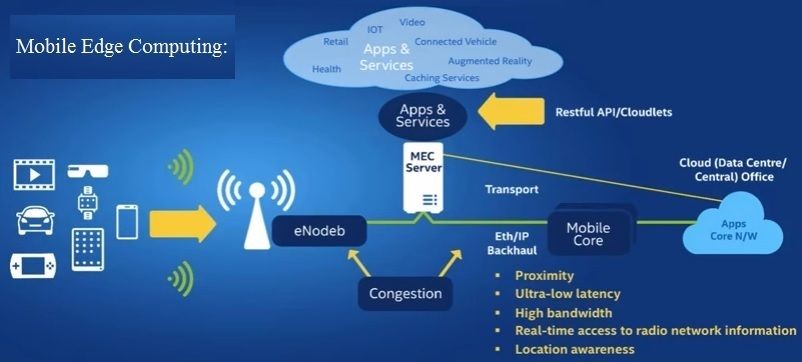
2: The Edge Takes Centre Stage
If there’s one thing that seasonally frustrates engineers, it’s latency. But with applications like:
-
3D holographic conferencing,
-
Remote-controlled surgeries,
-
Real-time digital twins for factories, and
-
Autonomous systems weaving through city traffic,
latency isn’t just a nuisance—it’s the difference between a seamless experience and catastrophic failure.
6G edge simulation lets researchers model:
-
Edge processing loads
-
Boundary coordination
-
Local caching behaviour
-
Interference patterns between sensors, towers, and micro-edge nodes
In short, simulation gives engineers a stress-testing playground.
3: Building Smarter, Greener Networks
Energy efficiency is one of the 6G’s biggest promises. But you can’t exactly plug in a million-node network just to see what happens.
Simulation enables:
-
Power-aware routing
-
Smart sleep cycles for devices
-
Dynamic spectrum management
-
Energy-optimised inference on the edge
Testing new architectures digitally is cheaper, cleaner, and much less likely to explode anything—always a plus.
Peeking Under the Hood: How 6G Edge Simulation Works
Digital Twins: The Stars of the Show
Creating a digital twin of a network isn’t just about copying structures; it’s about mirroring behaviours, constraints, and interactions.
A proper digital twin in 6G simulation involves:
-
Real-time feedback loops
-
Driven adaptive modelling
-
Layer-to-layer interaction mapping
-
Environmental modelling (humidity, motion, materials, and more)
Airports, hospitals, smart cities, and drones all get their own virtual selves.
Everywhere (Because Why Not?)
6G simulation frameworks are embedded in virtually every layer, helping:
-
Predict congestion
-
Optimize routing
-
Identify failure points
-
Balance workloads across edge nodes
It’s like the simulation comes with its own brain, running thousands of “what if?” scenarios that human engineers could never feasibly explore manually.
THz Propagation Models
Simulating THz communication involves modelling:
-
Molecular absorption
-
Atmospheric distortion
-
Beamforming precision
-
Scattering around real-world structures
This is where physics and engineering shake hands awkwardly but effectively.
Where 6G Edge Simulation Will Make the Biggest Impact
Smart Cities That Actually Work
Simulations help urban planners figure out things like:
-
How thousands of autonomous cars will communicate
-
Where micro-edge nodes should sit
-
How emergency systems can stay rock-solid
-
What happens when millions of sensors ping at once
Without simulation? You’re basically playing SimCity with real lives on the line.
Immersive Experiences We’ve Only Dreamed About
Imagine:
-
Holographic concerts
-
Real-time AR overlays of your environment
-
Photorealistic VR worlds streamed instantly
-
Virtual classrooms with lifelike avatars
These need insane speeds and near-zero latency—both of which 6G promises.
But only simulations can test these systems at scale before they go live.
Industrial Automation on Steroids
Factories will rely on:
-
Instant feedback systems
-
Predictive maintenance
-
Robotic coordination
-
Virtual modelling of production lines
Simulation is the glue that ensures everything runs like clockwork.
Healthcare That Transcends Distance
From remote surgery to AI-driven diagnostics, 6G stands to revolutionise healthcare. Edge simulation helps test:
-
Fail-safe protocols
-
Holographic imaging
-
Robotic responsiveness
-
Sensor accuracy under load
You definitely want these systems tested before they’re used on humans.
How Organisations Are Preparing for the 6G Era
1. Massive Investment in R&D
Tech giants, governments, and startups are pouring billions into simulation tools to get ahead of the curve.
2. Building Cross-Disciplinary Teams
Because 6G is equal parts:
-
Network engineering
-
modeling
-
Physics
-
Software architecture
-
Human behaviour analysis
Teams now look more like sci-fi think tanks than traditional telecom departments.
3. Adopting Open Testbeds
Collaborative simulation frameworks ensure:
-
Standardization
-
Interoperability
-
Faster development cycles
-
Cross-vendor innovation
The entire ecosystem gets smarter, faster.
Common Features of Modern 6G Edge Simulation Platforms
-
Scalable cloud-native architecture
-
Fine-grained edge orchestration models
-
based mobility prediction
-
THz-spectrum propagation engines
-
Energy consumption simulators
-
Virtual device emulation (from wearables to drones)
-
Real-time dashboards
These tools are nothing short of engineering magic.
Frequently Asked Questions (FAQ)
1. Why do we need 6G edge simulation when 6G isn’t here yet?
Because building 6G without simulation would be like designing a spaceship by eyeballing it. Simulation gives researchers the data and confidence they need long before infrastructure rolls out.
2. Will 6G edge simulation make networks more reliable?
Absolutely. Simulating edge conditions, load, interference, and user behavior helps engineers predict and fix issues before anyone ever runs into them.
3. Can small companies access 6G simulation tools?
Increasingly, yes. Cloud-based simulation environments are making these tools more accessible than ever.
4. Will 6G really bring holographic communication?
It’s not a pipe dream anymore. Multiple research initiatives are already exploring it—and relying heavily on simulation to make it feasible.
5. Does simulation speed up development?
Dramatically. It reduces field testing, lowers costs, and uncovers issues early on.
Conclusion
To sum it all up, 6G edge simulation is the unsung hero guiding the next generation of wireless communication into existence. It’s crafting the blueprint for near-instant interactions, tactile internet experiences, and powered networks that think for themselves. As 6G continues to evolve, simulations will only grow more sophisticated, more predictive, and more intertwined with the future of digital life.
Whether we’re talking smart cities, holographic meetings, green networking, or ultra-reliable autonomous systems, simulation will pave the way. One thing’s for sure: the journey to 6G won’t just be fast—it’ll be brilliantly, intelligently designed.
Ready or not, the future is being simulated as we speak.
