
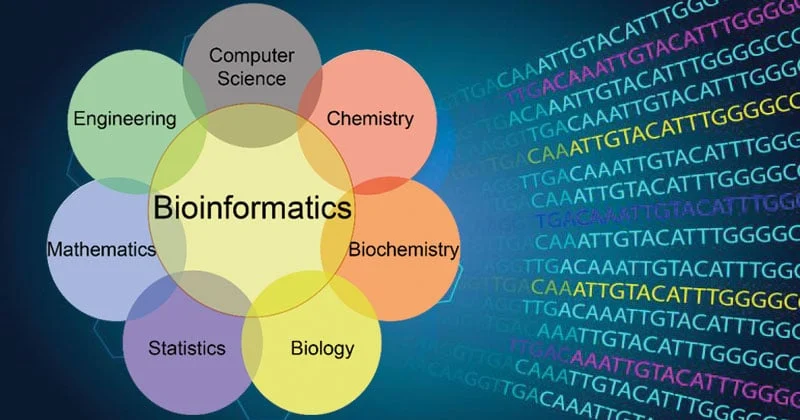
In the 21st century, one of the most transformative scientific fields reshaping medicine, biology, and technology is bioinformatics. At its core, bioinformatics is the fusion of biology, computer science, mathematics, and data analytics, working together to interpret complex biological data. As the digital era generates immense volumes of genetic, proteomic, and molecular information, bioinformatics acts as the bridge that deciphers this data, enabling groundbreaking innovations in healthcare, agriculture, and biotechnology. The phrase “unlocking life’s code” perfectly captures this mission—understanding DNA, proteins, and other biomolecules through the power of data and computation.
The Rise of Bioinformatics
Historically, biology relied heavily on observation and experimentation in laboratories. With the advent of DNA sequencing technologies in the late 20th century, researchers were suddenly confronted with massive datasets containing billions of nucleotides. Managing, analysing, and interpreting this vast information required computational tools. Thus, bioinformatics emerged as an essential discipline, transforming biology from a purely experimental science into a data-driven field.
The Human Genome Project, completed in 2003, stands as a milestone in the development of bioinformatics. This global effort to map the entire human genetic code would not have been possible without advanced algorithms, sequence alignment tools, and high-performance computing systems. Today, bioinformatics is not just a supporting tool—it is a driving force for discovery.
Core Components of Bioinformatics
To understand how bioinformatics works, it is useful to break it down into its major components:
- Data Acquisition and Storage
Biological experiments generate raw data such as DNA sequences, RNA transcripts, and protein structures. This information must be stored in massive databases like GenBank, EMBL, and UniProt, which act as digital libraries for researchers worldwide. - Sequence Analysis
A fundamental task of bioinformatics is comparing DNA, RNA, and protein sequences. Techniques like sequence alignment and motif searching help scientists identify similarities, evolutionary relationships, and functional regions in genetic material. - Structural Bioinformatics
Proteins and other biomolecules function based on their 3D structures. Bioinformatics tools model and predict these structures, enabling researchers to understand how mutations or drug molecules can influence biological function. - Systems Biology and Network Analysis
Beyond single genes or proteins, bioinformatics examines entire networks of interactions—how genes regulate one another, how proteins form complexes, and how pathways respond to environmental changes. - Machine Learning and AI Integration
Modern bioinformatics increasingly incorporates artificial intelligence. Algorithms learn patterns from vast datasets to predict disease outcomes, identify potential drug candidates, or suggest personalized treatment plans.
Applications of Bioinformatics
The versatility of bioinformatics makes it essential across multiple industries:
- Medicine and Healthcare
Bioinformatics enables precision medicine, where treatments are tailored to an individual’s genetic profile. It also helps in early disease detection, biomarker discovery, and the design of targeted therapies for cancer, cardiovascular diseases, and neurological disorders. - Drug Discovery and Development
Developing new drugs is expensive and time-consuming. Bioinformatics accelerates this process by simulating drug-target interactions, predicting side effects, and reducing the need for costly lab experiments. - Agriculture and Food Security
With global populations rising, bioinformatics contributes to breeding genetically resilient crops, improving livestock, and engineering plants to resist pests, diseases, and climate challenges. - Environmental Science
By studying microbial genomes, bioinformatics helps monitor ecosystems, track pollution, and develop bio-remediation strategies for restoring environmental health. - Forensic Science
DNA analysis powered by bioinformatics supports criminal investigations, ancestry tracing, and identification in disaster scenarios.
Innovations Driving the Field
Several modern innovations are propelling bioinformatics into new dimensions:
- Next-Generation Sequencing (NGS): Technologies that can sequence entire genomes in hours, generating terabytes of data that bioinformatics must analyse.
- Cloud Computing: Distributed systems that handle large-scale biological datasets with speed and efficiency.
- CRISPR and Gene Editing Tools: Bioinformatics helps identify target sequences and predict off-target effects, making gene editing safer.
- AI-Powered Predictive Models: Machine learning algorithms that forecast disease progression and suggest optimal treatment strategies.
Challenges in Bioinformatics
Despite its promise, bioinformatics faces several hurdles:
- Data Overload – With sequencing becoming cheaper, data is being produced faster than it can be processed.
- Data Integration – Combining genomic, proteomic, and clinical data remains a complex task.
- Privacy and Ethics – Genetic data raises concerns about consent, security, and misuse.
- Skill Gap – There is a shortage of professionals trained in both biology and advanced computation.
The Future of Bioinformatics
The future of bioinformatics is boundless. As quantum computing matures, it may unlock computational speeds that make today’s supercomputers obsolete. Integration with artificial intelligence will refine precision medicine, making healthcare proactive rather than reactive. Additionally, global collaborations and open-source platforms will democratize access to bioinformatics tools, ensuring that innovation is shared across borders.
The ultimate vision is a world where diseases are detected before symptoms appear, treatments are customised to individual biology, and agriculture meets the demands of growing populations without harming the planet. Bioinformatics is the key that makes these possibilities a reality.
Conclusion
Bioinformatics is not just a scientific discipline—it is a revolution in how humanity understands life. Merging data with biology provides insights that were unimaginable a few decades ago. From decoding the human genome to designing life-saving drugs and creating climate-resilient crops, bioinformatics stands at the intersection of knowledge and innovation. As technology continues to evolve, bioinformatics will remain a cornerstone of discovery, unlocking life’s code and shaping a healthier, smarter, and more sustainable future.
