
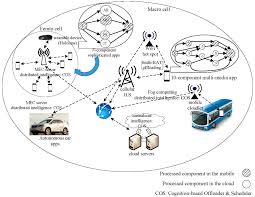
In the rapidly evolving digital economy, businesses are constantly seeking ways to harness intelligence, agility, and scalability to remain competitive. Cloud computing revolutionised how organisations store and process data, while artificial intelligence (AI) unlocked new opportunities for insights and automation. The convergence of these two powerful forces has given rise to Cognitive Cloud—a transformative approach to enterprise computing that blends cloud infrastructure with advanced AI and cognitive technologies. For smart enterprises, Cognitive Cloud is not just a tool; it is a catalyst for innovation, decision-making, and long-term resilience.
What is Cognitive Cloud?
At its core, Cognitive Cloud refers to the integration of cognitive computing—technologies like natural language processing, machine learning, and reasoning—within cloud environments. Unlike traditional cloud services that primarily provide storage, scalability, and computing power, Cognitive Cloud offers systems that can understand, learn, and interact much like humans.
Where a typical cloud platform might store business data, a Cognitive Cloud platform can:
-
Interpret that data,
-
Provide recommendations,
-
Predict outcomes, and
-
Continuously learn from new information.
This ability to combine data, intelligence, and adaptability makes the Cognitive Cloud an essential backbone for smart enterprises of the future.
Why Enterprises Need Cognitive Cloud
The shift toward Cognitive Cloud is driven by the rising complexity of modern business environments:
-
Data Explosion
Enterprises today generate and manage petabytes of data—from customer interactions and IoT sensors to financial transactions. Extracting meaning from this ocean of data requires intelligence that traditional systems cannot provide. -
Demand for Real-Time Insights
Decision-making in smart enterprises is increasingly real-time. Cognitive Cloud platforms enable on-the-fly analysis, offering leaders actionable insights at critical moments. -
Customer-Centric Models
With consumer expectations evolving rapidly, enterprises must personalise services. Cognitive Cloud uses AI to interpret customer behaviours, enabling hyper-personalised offerings. -
Agility in a Competitive Market
In dynamic industries, agility is key. Cognitive Cloud provides flexibility by integrating seamlessly across hybrid and multi-cloud environments while embedding AI-driven adaptability.
Core Features of Cognitive Cloud
To appreciate its potential, let’s break down the features that define Cognitive Cloud platforms:
-
Self-Learning Systems
Using machine learning and deep learning, Cognitive Cloud continuously improves its models by analyzing past patterns and adapting to new data streams. -
Natural Language Understanding
Cognitive systems can process unstructured data, such as customer emails, social media posts, or voice commands, enabling more human-like interaction. -
Predictive and Prescriptive Analytics
Beyond analysing historical data, Cognitive Cloud predicts future scenarios and suggests the best course of action. -
Automation at Scale
From IT operations to customer support, Cognitive Cloud enables enterprises to automate processes while still making intelligent, context-aware decisions. -
Interoperability and Integration
Cognitive Cloud platforms can work across diverse applications, APIs, and ecosystems, ensuring seamless connectivity in complex enterprise architectures.
Applications of Cognitive Cloud in Smart Enterprises
The true power of Cognitive Cloud lies in its applications across industries and enterprise functions:
-
Customer Experience Enhancement
Enterprises can leverage Cognitive Cloud to deliver personalized services through AI-driven chatbots, sentiment analysis, and predictive customer support. For instance, banks can anticipate customer queries and resolve issues proactively. -
Healthcare Transformation
Hospitals and clinics can use Cognitive Cloud to analyze patient records, assist in diagnoses, and recommend personalized treatment plans—all while ensuring scalability through cloud infrastructure. -
Supply Chain Optimization
Cognitive Cloud systems predict disruptions, optimize inventory levels, and streamline logistics in real-time, creating agile supply chains for global enterprises. -
Financial Services
Fraud detection, risk management, and investment advisory services are enhanced by cognitive capabilities, improving accuracy and security while reducing costs. -
Human Resource Management
Enterprises can use Cognitive Cloud to automate recruitment processes, screen resumes intelligently, and recommend talent matches, improving hiring efficiency. -
Manufacturing and Industry 4.0
Predictive maintenance powered by Cognitive Cloud reduces downtime, while AI-driven process optimization enhances efficiency in production lines.
Benefits for Smart Enterprises
Cognitive Cloud offers a host of advantages that position enterprises for success:
-
Intelligence Everywhere: Embeds decision-making into every process.
-
Scalability: Handles increasing workloads without compromising performance.
-
Cost Efficiency: Reduces operational costs through automation and predictive analytics.
-
Personalisation: Delivers customer experiences tailored to individual needs.
-
Resilience: Provides adaptability in volatile and uncertain environments.
-
Collaboration: Connects teams and systems with a shared intelligence fabric.
Challenges to Adoption
Despite its potential, Cognitive Cloud adoption comes with challenges enterprises must navigate:
-
Data Privacy and Security
Storing and processing sensitive data on cloud platforms requires strict compliance with regulations such as GDPR or HIPAA. -
Integration Complexity
Enterprises with legacy systems may face difficulties integrating Cognitive Cloud without disrupting operations. -
High Initial Investment
While cost-efficient in the long term, Cognitive Cloud implementation often demands significant upfront investment in infrastructure and expertise. -
Talent Shortage
Cognitive Cloud requires expertise in AI, data science, and cloud engineering—skills that remain in short supply globally.
The Road Ahead: Future of Cognitive Cloud
The future of Cognitive Cloud is poised for exponential growth as enterprises embrace intelligent automation and decision augmentation. We can expect:
-
Cognitive-as-a-Service (CaaS): Just as enterprises now subscribe to SaaS, they will access on-demand cognitive capabilities tailored to specific needs.
-
Edge + Cognitive Integration: With the rise of edge computing, Cognitive Cloud will move closer to data sources, enabling faster and more efficient real-time intelligence.
-
Industry-Specific Clouds: Specialised Cognitive Cloud platforms will emerge for healthcare, finance, retail, and more, offering customised capabilities.
-
Ethical and Responsible AI: Enterprises will demand transparent and bias-free cognitive systems to maintain trust and compliance.
In this trajectory, enterprises that adopt Cognitive Cloud early will position themselves as smart enterprises, capable of thriving in a hyper-connected, data-driven world.
Conclusion
“Cognitive Cloud and the Future of Smart Enterprises” is more than a technological trend; it represents a paradigm shift in how businesses function. By merging the scalability of cloud computing with the intelligence of cognitive systems, enterprises can achieve new levels of agility, personalisation, and decision-making power.
For smart enterprises, the Cognitive Cloud is not a distant vision—it is the next strategic move. Those who weave intelligence into their digital fabric today will define the competitive landscape of tomorrow.
