
Introduction
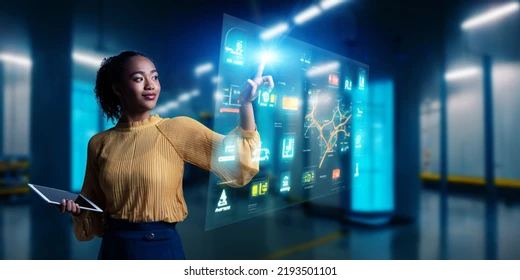
Technology has always been about breaking barriers and enhancing the way humans interact with their environment. From the invention of the wheel to the rise of the internet, each leap in innovation has transformed daily life. One of the most groundbreaking technologies of the modern era is Mixed Reality (MR), a revolutionary blend of physical and digital environments that allows people to interact with both real-world objects and virtual elements simultaneously. Unlike Virtual Reality (VR), which immerses users in a fully digital space, or Augmented Reality (AR), which overlays digital information onto the real world, Mixed Reality combines both, creating a truly interactive, hybrid environment. This powerful fusion is shaping the future of work, education, entertainment, and human experience in ways previously unimaginable.
Understanding Mixed Reality
Mixed Reality is the merging of physical and digital worlds into a single cohesive experience. It enables users to see, hear, and interact with digital content that is seamlessly integrated into the real environment. Devices such as Microsoft HoloLens, Meta Quest Pro, and emerging MR headsets use advanced sensors, artificial intelligence, and spatial computing to create realistic interactions between physical and virtual objects.
For example, imagine a surgeon overlaying digital anatomy on a patient’s body during surgery, or an architect walking through a building that only exists as a digital model. Mixed Reality goes beyond passive viewing—it allows real-time interaction, making it far more dynamic than traditional VR or AR.
The Core Technologies Behind MR
Several advanced technologies power Mixed Reality, including:
-
Spatial Computing – Enables devices to understand and map the physical environment, allowing digital objects to interact with real-world surfaces.
-
Artificial Intelligence (AI) – Enhances object recognition, gesture tracking, and voice commands, making MR experiences more intuitive.
-
3D Holograms – Creates realistic digital elements that can be manipulated as if they were physical objects.
-
Cloud Computing – Provides storage and processing power to support large-scale MR applications.
-
5G Connectivity – Ensures seamless real-time experiences with minimal latency.
Together, these technologies bring MR experiences to life, opening endless possibilities for innovation.
Applications of Mixed Reality
Mixed Reality is rapidly gaining traction across multiple industries. Some of the most impactful applications include:
1. Healthcare
MR is revolutionising medicine by providing doctors with powerful visualisation tools. Surgeons can overlay 3D models of organs during operations, while medical students can practice on lifelike holographic patients without risks. It also enhances telemedicine by enabling remote collaboration between experts worldwide.
2. Education and Training
Classrooms are no longer confined to textbooks and screens. With MR, students can explore ancient civilisations, interact with 3D molecular models, or simulate complex experiments. In professional training, MR helps workers practice in high-risk environments, such as aviation or military operations, without danger.
3. Workplace Collaboration
In the era of remote work, MR enables immersive meetings where participants can interact with 3D data, virtual whiteboards, and holographic avatars. Companies like Microsoft are pioneering MR solutions that enhance productivity and teamwork across distances.
4. Architecture and Engineering
Architects and engineers can create digital twins of their designs, walk through them, and make real-time adjustments. MR reduces errors, improves client presentations, and accelerates project development.
5. Entertainment and Gaming
The gaming industry is one of the biggest drivers of MR adoption. MR games allow players to interact with characters and environments in their own living spaces, creating immersive and personalized gameplay. In film and media, MR is being used to design interactive storytelling experiences.
6. Retail and E-Commerce
MR is transforming shopping experiences by allowing customers to visualize products in their homes before purchase. Furniture, clothing, and home décor retailers are already adopting MR to enhance consumer engagement.
Benefits of Mixed Reality
The advantages of MR are vast and transformative:
-
Enhanced Learning – Interactive, hands-on education leads to better understanding and retention.
-
Improved Productivity – Professionals can visualize and manipulate complex data more effectively.
-
Cost Reduction – Virtual simulations reduce the need for physical prototypes and training materials.
-
Accessibility – MR bridges physical distances, enabling global collaboration and inclusion.
-
Innovation – Encourages creativity and opens new opportunities in every industry.
Challenges Facing Mixed Reality
Despite its promise, MR faces several challenges:
-
High Costs – MR devices and software remain expensive, limiting accessibility.
-
Technical Limitations – Current hardware still struggles with battery life, resolution, and field of view.
-
Privacy Concerns – As MR devices collect environmental and personal data, ensuring data security is critical.
-
Adoption Barriers – Many industries are hesitant to adopt MR due to a lack of awareness or resistance to change.
-
Health Issues – Prolonged use of headsets can cause eye strain, motion sickness, or fatigue.
Addressing these challenges will be essential for MR to reach its full potential.
The Future of Mixed Reality
As technology advances, Mixed Reality will become more accessible, affordable, and seamless. The rise of 6G networks, miniaturised hardware, and AI-driven environments will make MR experiences more immersive and lifelike. Future applications may include holographic social interactions, smart cities with MR interfaces, and advanced MR-assisted robotics.
In the long run, MR may blur the line between physical and digital so completely that humans will operate in a unified “phygital” environment. This evolution could redefine work, education, entertainment, and even personal identity.
Conclusion
Mixed Reality represents the next great leap in human-technology interaction. By blending physical and digital worlds it creates immersive, interactive experiences that go beyond imagination. Whether in healthcare, education, business, or entertainment, MR is unlocking opportunities that were once confined to science fiction. While challenges exist, the momentum behind Mixed Reality suggests that it will soon be as integral to our lives as smartphones and the internet are today.
In essence, Mixed Reality is not just a technology—it is a gateway to the future of human experience, where the boundaries of reality and imagination no longer exist.
