
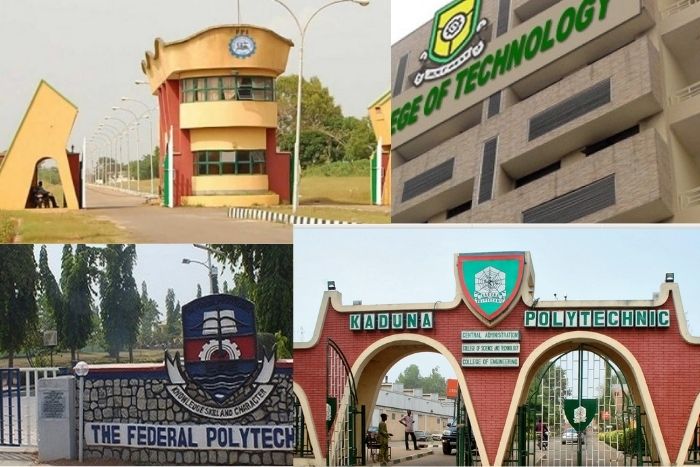
Introduction
Education is the backbone of national development, and in Nigeria, polytechnics play a crucial role in producing skilled, innovative, and job-ready graduates. While universities focus on theoretical learning, Nigerian polytechnics emphasise technical and vocational education, bridging the gap between knowledge and practical skills.
Polytechnics in Nigeria have evolved over the years to become centres of technological advancement, entrepreneurship training, and industrial development. This article explores the history, structure, importance, challenges, and future of Nigerian polytechnics in shaping the nation’s workforce.
What Are Nigerian Polytechnics?
A polytechnic is a tertiary institution that provides education in applied sciences, engineering, technology, management, and other technical fields. Nigerian polytechnics are designed to train students in hands-on skills and industrial techniques needed to support the economy.
They offer two main academic qualifications:
-
National Diploma (ND) – typically a 2-year program.
-
Higher National Diploma (HND) – an advanced 2-year program after ND.
These programs are regulated by the National Board for Technical Education (NBTE), ensuring that all polytechnics meet national academic and technical standards.
The Structure of Nigerian Polytechnics
Nigerian polytechnics are classified into two main categories:
1. Federal Polytechnics
Owned and funded by the Federal Government of Nigeria. They often have the best infrastructure and nationwide admission reach.
Examples include:
-
Federal Polytechnic, Nekede (Owerri)
-
Yaba College of Technology (YABATECH)
-
Federal Polytechnic, Ilaro
-
Federal Polytechnic, Ado-Ekiti
-
Kaduna Polytechnic
2. State Polytechnics
Managed by state governments, these institutions serve local communities and enhance regional skill development.
Examples include:
-
Lagos State Polytechnic (LASPOTECH)
-
Rufus Giwa Polytechnic, Owo
-
Delta State Polytechnic, Ogwashi-Uku
-
Kano State Polytechnic
3. Private Polytechnics
Privately owned institutions that complement government efforts and increase access to technical education.
Examples include:
-
Crown Polytechnic, Ekiti
-
Heritage Polytechnic, Akwa Ibom
-
Allover Central Polytechnic, Ogun
Importance of Nigerian Polytechnics
Polytechnics contribute massively to Nigeria’s economic growth and industrialisation. Their importance can be seen in several areas:
🔧 1. Skills Development
They equip students with practical and technical skills that are in high demand in industries like manufacturing, construction, and ICT.
💼 2. Job Creation
Graduates are trained not just to seek jobs but to create employment through innovation and entrepreneurship.
🧠 3. Innovation and Research
Polytechnics drive applied research — turning ideas into practical solutions that address real-world problems in Nigeria.
🌍 4. Accessibility
Polytechnics provide affordable tertiary education to thousands of Nigerian youths who may not have access to universities.
🏗️ 5. Industrial Growth
Through partnerships with industries, polytechnics supply technicians, engineers, and artisans needed for national projects and infrastructure.
Comparison: Polytechnic vs University Education in Nigeria
| Feature | Polytechnic | University |
|---|---|---|
| Focus | Technical and practical skills | Theoretical and research-based learning |
| Duration | ND (2 yrs) + HND (2 yrs) | 4–6 years for a degree |
| Outcome | Skilled technologists and technicians | Professional and academic graduates |
| Regulator | NBTE | NUC (National Universities Commission) |
| Job Readiness | High | Moderate |
| Transition | ND → HND → (Optional BSc conversion) | Direct to postgraduate studies |
Both systems are essential to Nigeria’s education structure, but polytechnics emphasise skill-based learning that directly supports industries.
Challenges Facing Nigerian Polytechnics
Despite their importance, Nigerian polytechnics face several challenges that limit their full potential:
1. Poor Funding
Inadequate funding affects facilities, laboratories, and staff welfare, reducing the quality of training.
2. HND vs BSc Discrimination
Employers and government agencies often prefer university graduates over HND holders, creating a perception gap.
3. Infrastructural Decay
Many polytechnics lack modern tools and equipment necessary for training in fields like engineering and computer science.
4. Curriculum Gaps
Some programs have outdated curricula that fail to meet the current demands of industries and technology.
5. Industrial Training Limitations
Industrial Training (IT), a key part of the ND program, is sometimes poorly supervised or underfunded.
Government and NBTE Efforts
The National Board for Technical Education (NBTE) plays a critical role in maintaining quality and relevance across all polytechnics in Nigeria.
Recent government efforts include:
-
Curriculum updates to match global standards.
-
Conversion of some polytechnics to degree-awarding institutions.
-
Investment in ICT infrastructure and e-learning systems.
-
Plans to bridge the gap between HND and BSc qualifications through policy reforms.
Opportunities in Nigerian Polytechnics
Despite challenges, polytechnics in Nigeria present growing opportunities:
-
Digital Technology Programs: Many polytechnics now offer courses in Artificial Intelligence, Software Engineering, and Data Science.
-
Entrepreneurship Training: Students are encouraged to start small businesses before graduation.
-
Global Partnerships: Some polytechnics collaborate with international institutions for skill exchange.
-
TVET Expansion: Technical and Vocational Education and Training (TVET) initiatives are empowering youths with employable skills.
Top 10 Polytechnics in Nigeria (2025 Ranking)
-
Yaba College of Technology (YABATECH), Lagos
-
Federal Polytechnic, Nekede
-
Kaduna Polytechnic, Kaduna
-
Federal Polytechnic, Ilaro
-
Auchi Polytechnic, Auchi
-
Lagos State Polytechnic (LASPOTECH)
-
Federal Polytechnic, Ado-Ekiti
-
Rufus Giwa Polytechnic, Owo
-
Delta State Polytechnic, Ogwashi-Uku
-
Federal Polytechnic, Oko
These polytechnics are known for their academic excellence, technical innovation, and graduate employability.
The Future of Nigerian Polytechnics
The future of Nigerian polytechnics lies in digital transformation, global collaboration, and innovation.
With AI, robotics, and renewable energy becoming new economic frontiers, polytechnics must adapt quickly by introducing modern programs and technology-based curricula.
Government and private investors need to work together to reposition polytechnics as the engine of Nigeria’s industrial revolution.
FAQ – Nigerian Polytechnics
Q1: What is the difference between ND and HND?
ND (National Diploma) is the first-level qualification, while HND (Higher National Diploma) is an advanced level that requires completing an ND and one year of industrial training.
Q2: Can I convert my HND to a university degree?
Yes. Several Nigerian and foreign universities offer “top-up” or conversion programs for HND holders to earn a BSc.
Q3: Who regulates Nigerian polytechnics?
The National Board for Technical Education (NBTE) is responsible for regulating and accrediting all polytechnic programs.
Q4: Are Nigerian polytechnic graduates employable abroad?
Yes, though recognition may depend on country-specific evaluation systems. Many HND holders further their studies internationally.
Q5: Which polytechnic is the best in Nigeria?
According to recent rankings, Yaba College of Technology (YABATECH) and Federal Polytechnic, Nekede are among the top.
Conclusion
Nigerian polytechnics are the foundation of the nation’s technical education and industrial progress. They produce engineers, designers, builders, and innovators who turn theory into action.
Despite funding and policy challenges, the polytechnic system remains one of Nigeria’s best channels for youth empowerment and economic growth.
With continuous reforms, improved funding, and digital innovation, Nigerian polytechnics can compete globally — driving the country toward a future built on skills, creativity, and innovation.
