
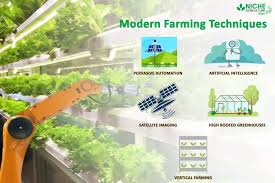
Introduction
Picture this: lush green fields, buzzing drones overhead, robotic arms picking ripe tomatoes, and farmers checking crop health on tablets instead of trudging through muddy fields. Sounds like something straight out of a sci-fi movie, right? Well, it’s not. Welcome to the world of modern farming techniques—a revolution that’s reshaping how we grow our food, conserve resources, and feed an ever-growing population.
Gone are the days when farming relied solely on muscle, weather, and a good dose of luck. Today’s agriculture blends science, technology, and data-driven precision into an art form. Farmers aren’t just growers anymore—they’re data analysts, engineers, and environmental stewards all rolled into one.
So, what exactly are modern farming techniques? And how are they changing the way we think about food production? Let’s dig deep into the soil of innovation and find out!
The Evolution of Farming: From Ploughs to Processors
It’s hard to believe, but farming has evolved more in the last 50 years than it did in the previous 5,000. Humanity’s relationship with agriculture has always been tied to innovation—each new invention pushing the limits of what’s possible.
-
The Ancient Era: Farming began with manual labour, wooden ploughs, and seed scattering. Simple, yes—but effective for its time.
-
The Industrial Revolution: Steam engines and mechanical equipment changed the game, making large-scale farming possible.
-
The Green Revolution: The 20th century brought chemical fertilisers, hybrid seeds, and irrigation systems that multiplied yields.
-
The Digital Age: Now, sensors and automation dominate the fields, leading to smart agriculture that conserves resources and maximises production.
In a nutshell, farming has shifted from being purely labour-intensive to being knowledge-intensive. Farmers now grow with brains as much as with brawn!
Understanding Modern Farming Techniques
At its core, modern farming techniques aim to increase efficiency, reduce waste, and protect the environment. The idea isn’t just to grow more—it’s to grow smarter.
1. Precision Agriculture: Farming with Foresight
Ever wondered how farmers know exactly where to plant, water, or fertilise? That’s precision agriculture at work!
Using GPS, sensors, and data analytics, farmers can:
-
Monitor soil moisture and nutrient levels.
-
Apply fertilisers only where needed.
-
Detect pests or diseases early.
-
Use drones to map and analyse crop health.
Imagine farming where every drop of water and every grain of fertiliser counts—precision agriculture turns that into reality.
2. Vertical Farming: Sky-High Sustainability
What if you could grow food in skyscrapers? No, seriously—vertical farming does exactly that.
This method stacks crops in layers inside climate-controlled buildings. With LED lighting, hydroponic systems, and monitoring, it creates an ideal environment for growth—without the need for soil or sunshine.
Benefits include:
-
Reduced land use (perfect for urban areas).
-
Year-round production regardless of weather.
-
Up to 90% less water usage compared to traditional methods.
From Tokyo to New York, vertical farms are sprouting up as cities embrace this futuristic way to feed their residents sustainably.
3. Hydroponics and Aquaponics: Soil? Who Needs It!
Hydroponics and aquaponics are two of the coolest modern farming techniques shaking up the agricultural world.
-
Hydroponics grows plants in a nutrient-rich water solution.
-
Aquaponics combines hydroponics with fish farming—fish waste nourishes the plants, and plants purify the water for fish.
These closed-loop systems save water, eliminate soil-borne diseases, and can be set up just about anywhere—even in deserts or warehouses!
4. Drone Farming: Eyes in the Sky
Forget scarecrows; drones are the new guardians of the field. Farmers use drones to monitor crops, spray pesticides, and even plant seeds!
These high-tech helpers:
-
Capture aerial imagery to assess crop health.
-
Identify problem areas before they spread.
-
Reduce the need for manual inspection.
It’s farming elevated—literally.
5. Smart Irrigation Systems: Every Drop Matters
Water scarcity is a major concern for agriculture worldwide. That’s where smart irrigation systems come in.
Using sensors and real-time data, these systems deliver water precisely when and where it’s needed. They prevent overwatering, reduce energy use, and ensure crops get the perfect amount of hydration.
Some systems even adjust automatically based on weather forecasts. Talk about intelligent farming!
6. Biotechnology: Breeding the Future
Modern farming isn’t just about how we grow—it’s also about what we grow. Through biotechnology, scientists are developing crops that are:
-
Drought-resistant.
-
Pest-tolerant.
-
Nutrient-enriched.
For instance, genetically modified (GM) crops can thrive in harsh conditions and resist diseases, helping farmers reduce chemical use while maintaining yields.
While biotechnology often sparks debate, there’s no denying its role in ensuring food security in an unpredictable climate.
Sustainability: The Heartbeat of Modern Farming
It’s not enough to grow more food; we must do it responsibly. Modern farming techniques embrace sustainability by minimising environmental impact and conserving natural resources.
Here’s how:
-
Reducing chemical dependency: Precision farming reduces pesticide overuse.
-
Conserving water: Smart irrigation and hydroponics use up to 80–90% less water.
-
Cutting emissions: Electric machinery and renewable energy reduce the carbon footprint.
-
Improving soil health: Crop rotation and organic farming maintain nutrient balance.
Farming isn’t just about the next harvest anymore—it’s about the next generation.
The Role of Artificial Intelligence in Agriculture
Artificial Intelligence is the new backbone of modern farming. Farmers now use data-driven platforms to analyse weather patterns, predict pest outbreaks, and even recommend planting schedules.
applications include:
-
Image recognition to detect diseased leaves.
-
Predictive analytics for better yield forecasting.
-
Autonomous machinery that operates 24/7.
Picture a self-driving tractor ploughing fields while its brain crunches satellite data to plan the next irrigation cycle. Sounds like the future? It’s already here!
Challenges of Modern Farming Techniques
Of course, it’s not all sunshine and strawberries. Despite its promise, modern farming faces a few bumps along the road:
-
High initial costs: Advanced machinery, sensors, and software can be pricey for small farmers.
-
Technical know-how: Not everyone’s ready to interpret satellite imagery or operate a drone.
-
Data privacy: With so much digital tracking, farm data security becomes a real issue.
-
Climate unpredictability: Even the best tech can’t control Mother Nature.
Still, the long-term benefits often outweigh the hurdles, especially as technology becomes more accessible and affordable.
Future Trends: What’s Next for Modern Farming?
The future of farming looks bright—and digital. Here’s what’s on the horizon:
-
Nanotechnology: Tiny sensors that monitor soil nutrients at the molecular level.
-
Robotic Harvesting: Fully automated pickers that recognise ripe fruits and vegetables.
-
CRISPR Gene Editing: More efficient ways to develop resilient crops.
-
Blockchain Traceability: Track food from farm to fork, ensuring transparency and safety.
The next few decades could see farms that run almost entirely autonomously, powered by renewable energy and guided by.
FAQs About Modern Farming Techniques
Q1: What are modern farming techniques?
A: They’re innovative agricultural methods that use technology, like drones, sensors, and to boost productivity, save resources, and promote sustainability.
Q2: How do modern farming techniques benefit farmers?
A: Farmers can produce higher yields, reduce waste, save water, and make data-driven decisions for better profitability.
Q3: Are these techniques only for big farms?
A: Not at all! While large-scale farms lead adoption, smallholders can also benefit through shared equipment, government programs, and training initiatives.
Q4: Is modern farming environmentally friendly?
A: Absolutely. Many techniques focus on reducing pollution, conserving water, and promoting soil health—making agriculture more sustainable.
Q5: What’s the most promising technology for the future?
A: AI and automation are game-changers, but vertical and hydroponic farming are leading the charge toward sustainable, urban-based food production.
Conclusion: The Seeds We Sow Today Shape Tomorrow
Modern farming techniques are not just transforming agriculture—they’re redefining humanity’s relationship with the Earth. By blending innovation with intuition, farmers are crafting a new era where productivity and sustainability go hand in hand.
As technology continues to evolve, so too will the way we grow our food. Perhaps the farms of tomorrow won’t be measured in acres, but in algorithms. Maybe drones will replace scarecrows, and soil will give way to sensors.
But one thing’s for sure: as long as humans need to eat—and dream—the spirit of farming will endure. It’ll just look a whole lot smarter, greener, and yes, a bit more high-tech.
